A placefor thought.
Twelve identical residences in weathering steel, each set alone into one of the earth's most extreme landscapes. One party at a time, from three nights to a month, fully off-grid.
A place for thought. Nothing arranged to be looked at but the world itself.
Autonomy is privacy.
Every Orium makes its own power, water and heat, and answers to no grid, road or signal beyond its own ground. A place that needs nothing from the world keeps no record of you for the world to find.
It is built for the few who carry the most and are rarely left alone: founders, principals, writers, anyone whose attention is always claimed. Long stays are the point, and the quiet they buy.
Twelve worlds, one ring of them.
By request. For very few.
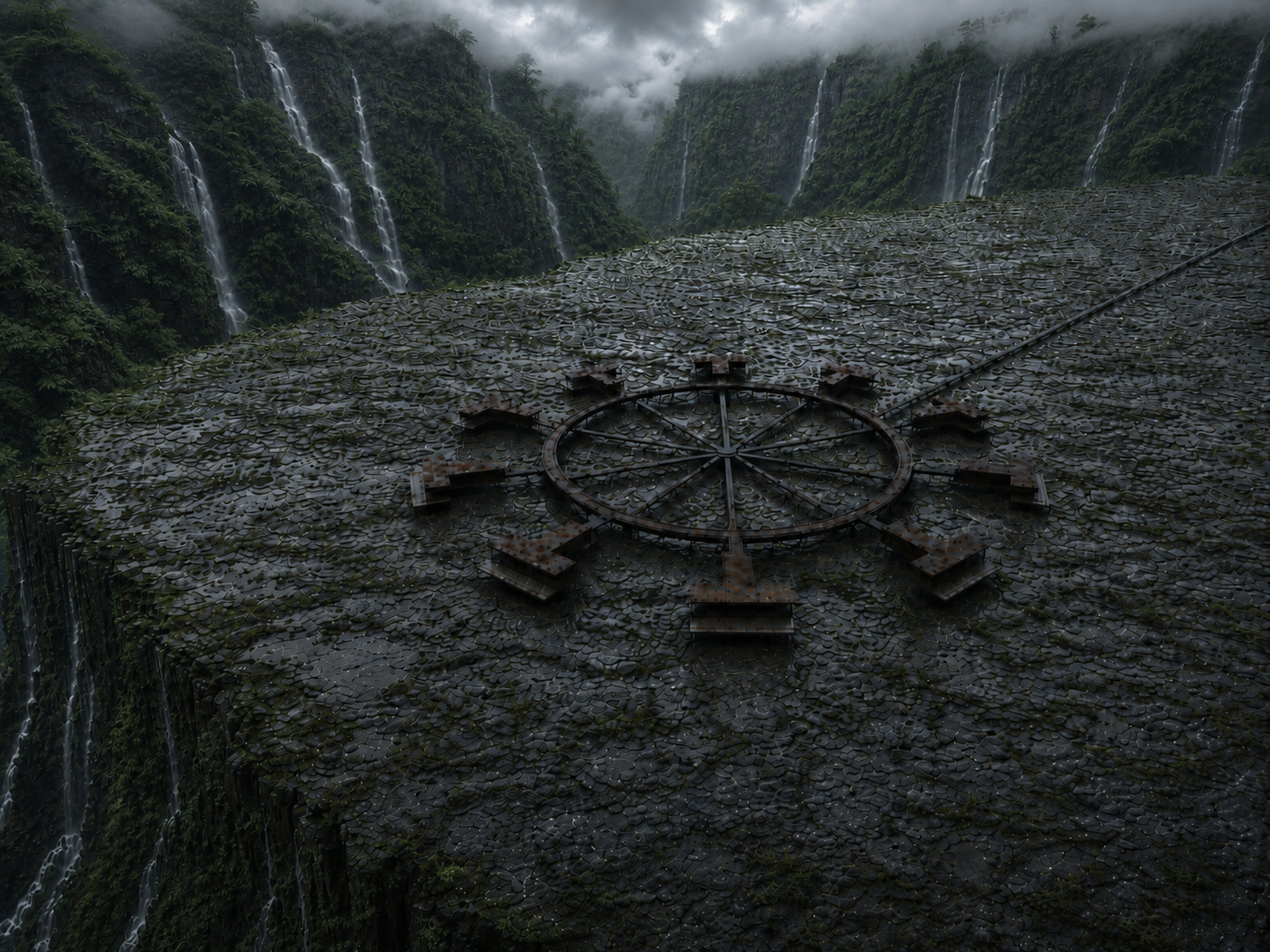
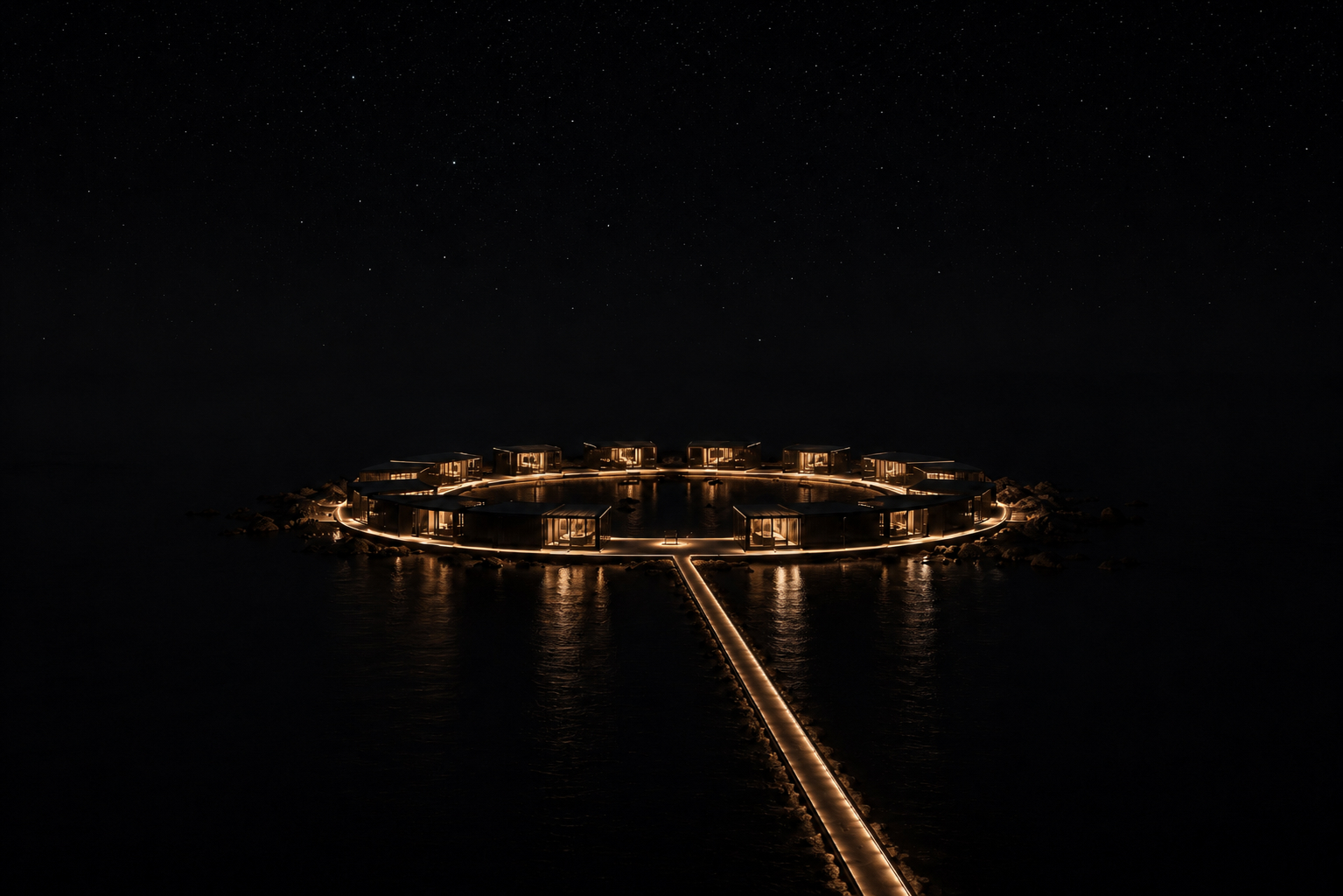
One ring. Twelve residences.
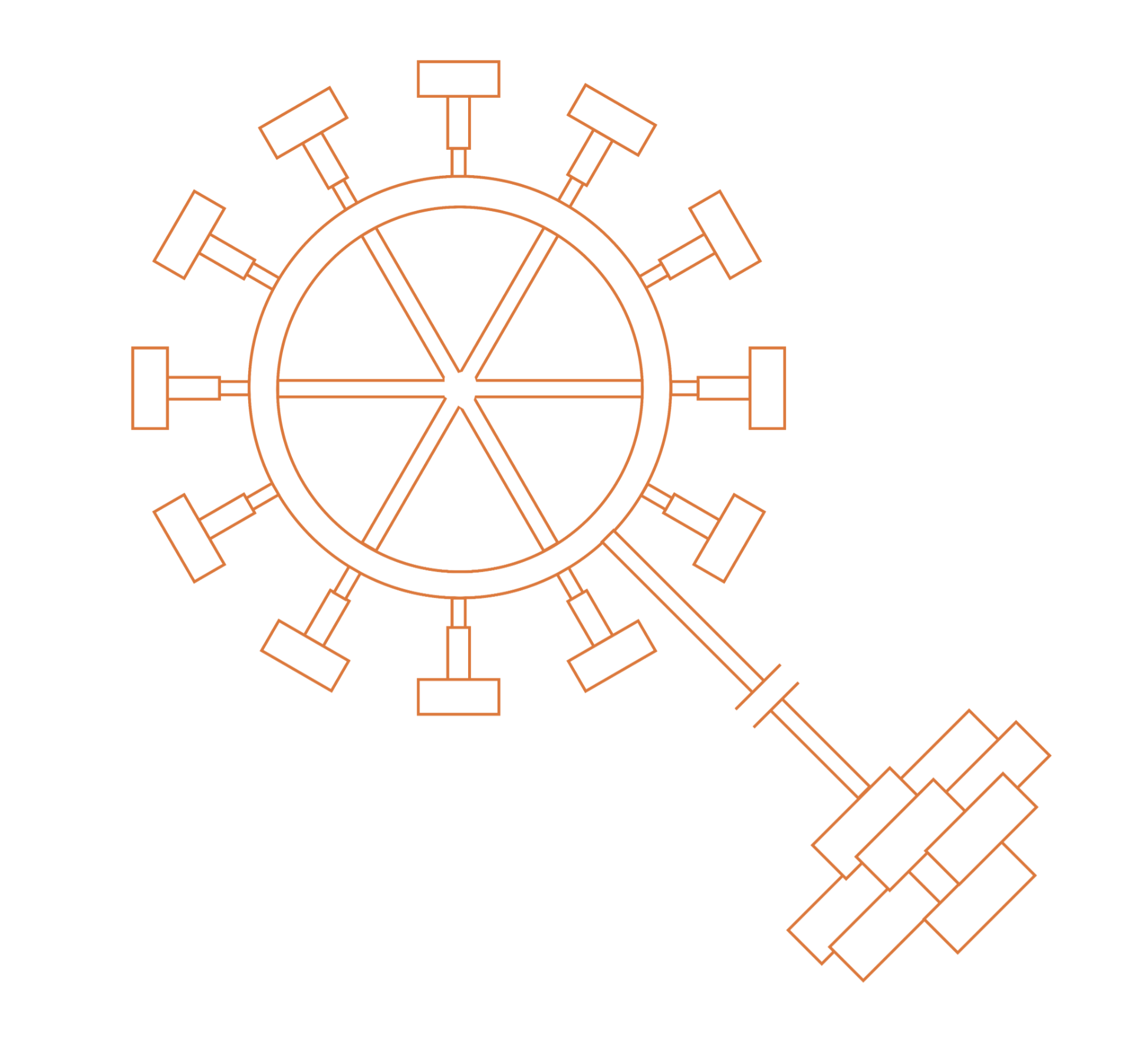
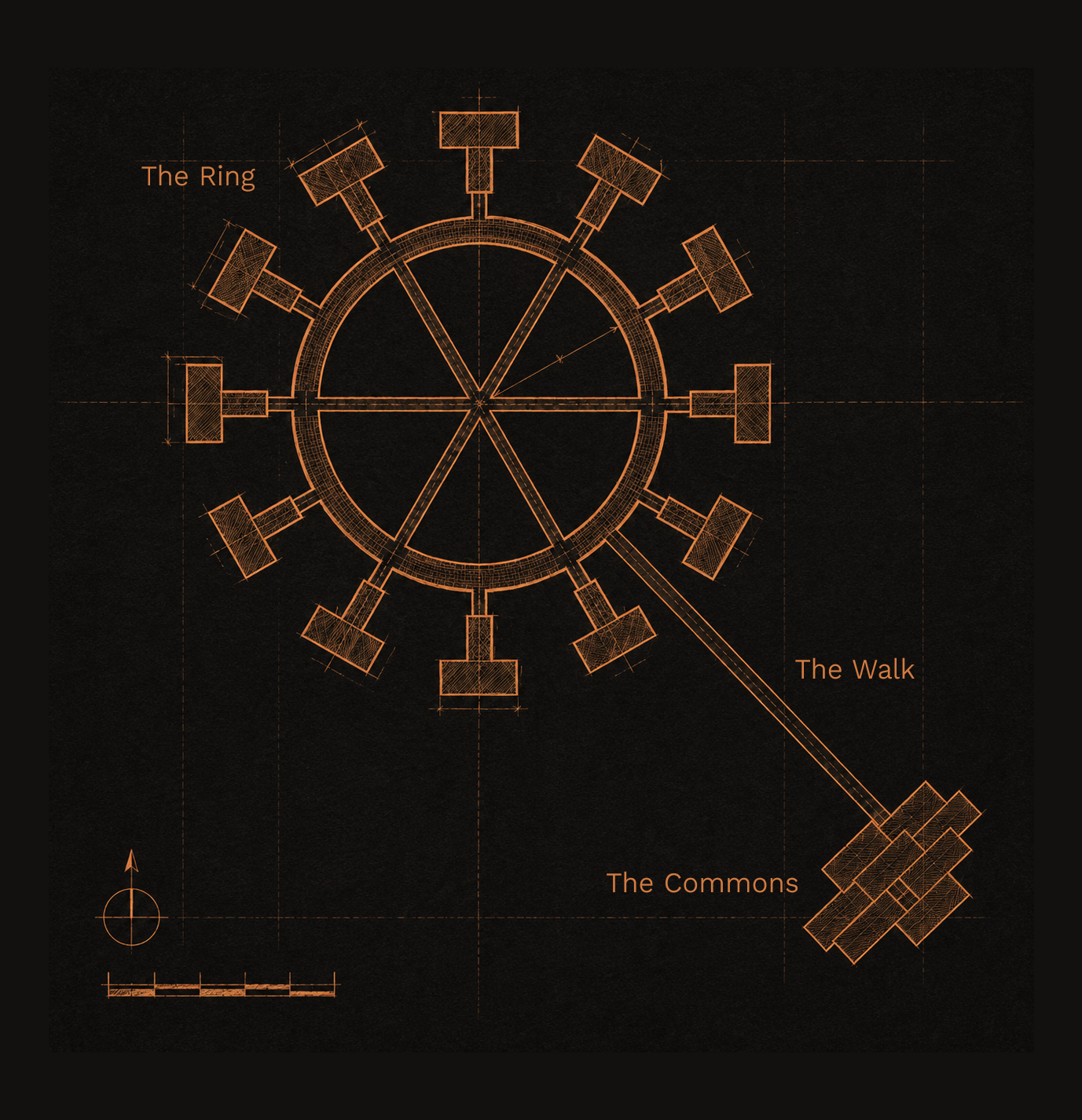
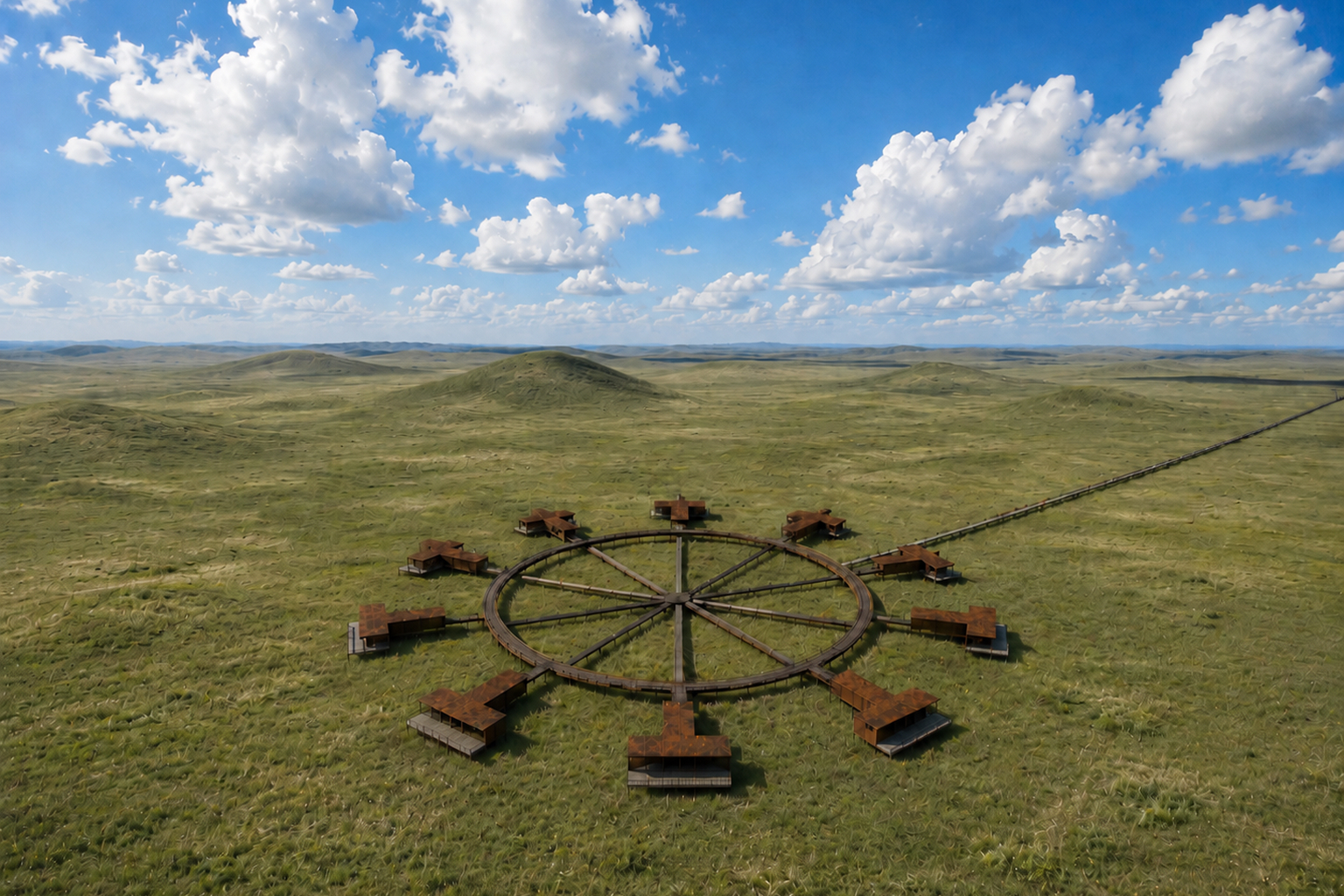
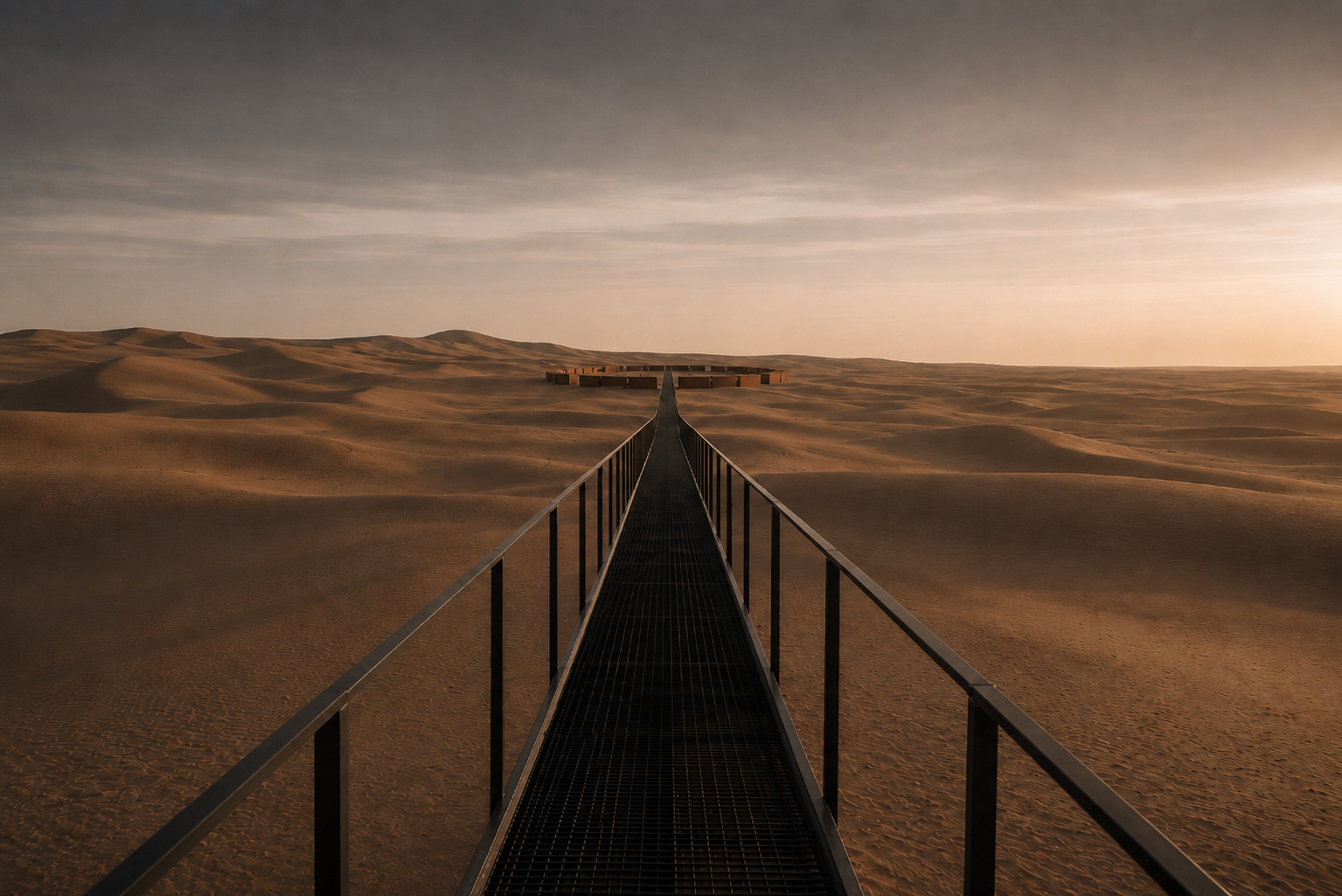
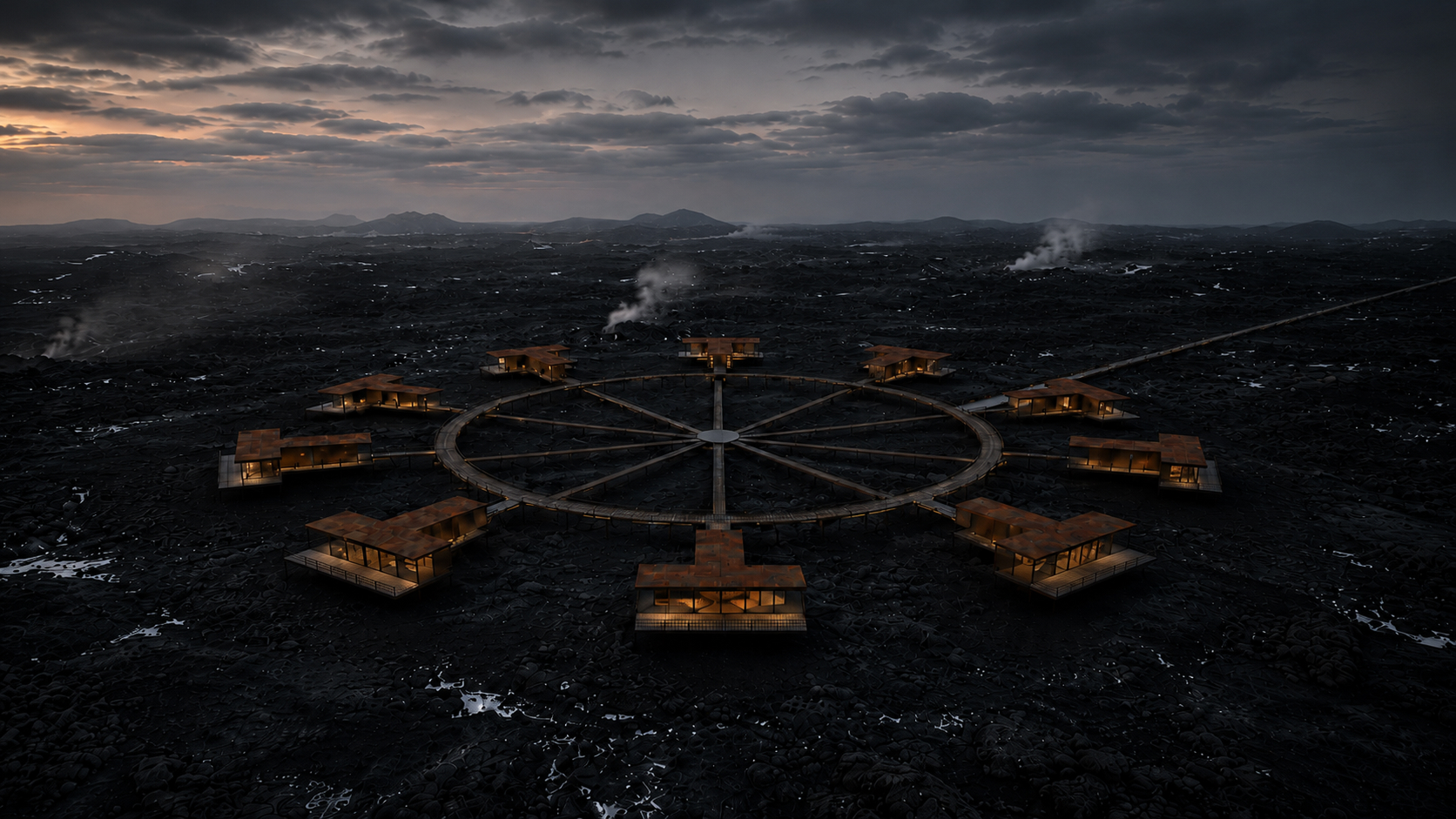
Orium is a single building run as a small resort: a raised ring of weathering steel carrying twelve private residences around an empty centre, with everything shared set a deliberate walk away. One structure, built once, then set into twelve different worlds.
The layout, in one read.
Twelve residences sit evenly around a circular steel walkway. The centre is left empty on purpose; it is the one part of Orium that no one occupies.
Each residence faces outward at its own angle, so from inside one you never see another. You see only the world it was set into.
Everything practical (kitchens, cellar, staff, plant and arrival) is gathered in the Commons, a cluster of stacked corten volumes off the ring. The path between the two is the Walk, and it does the quiet work of the whole design: the world ends where it begins.
One structure, twelve grounds.
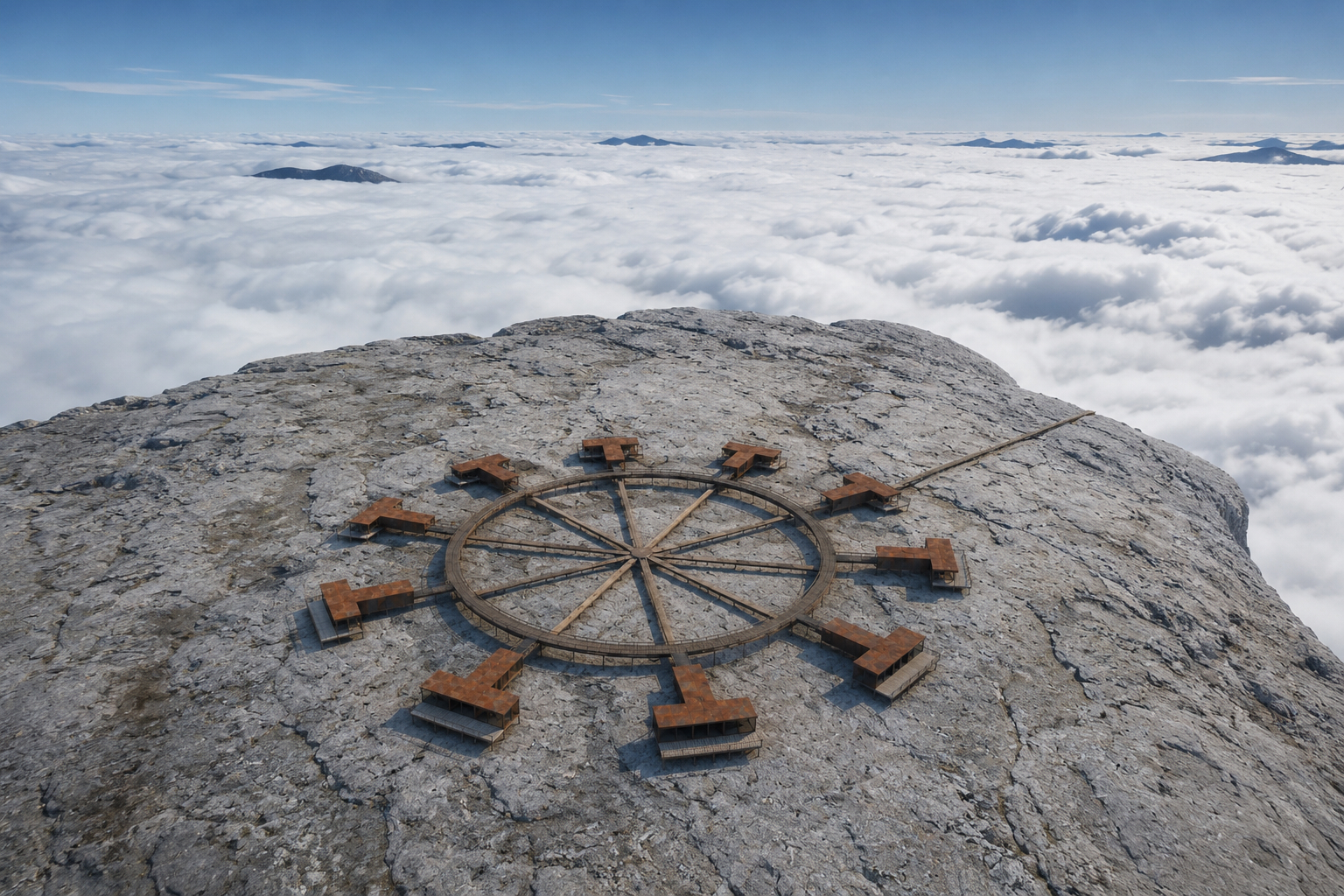
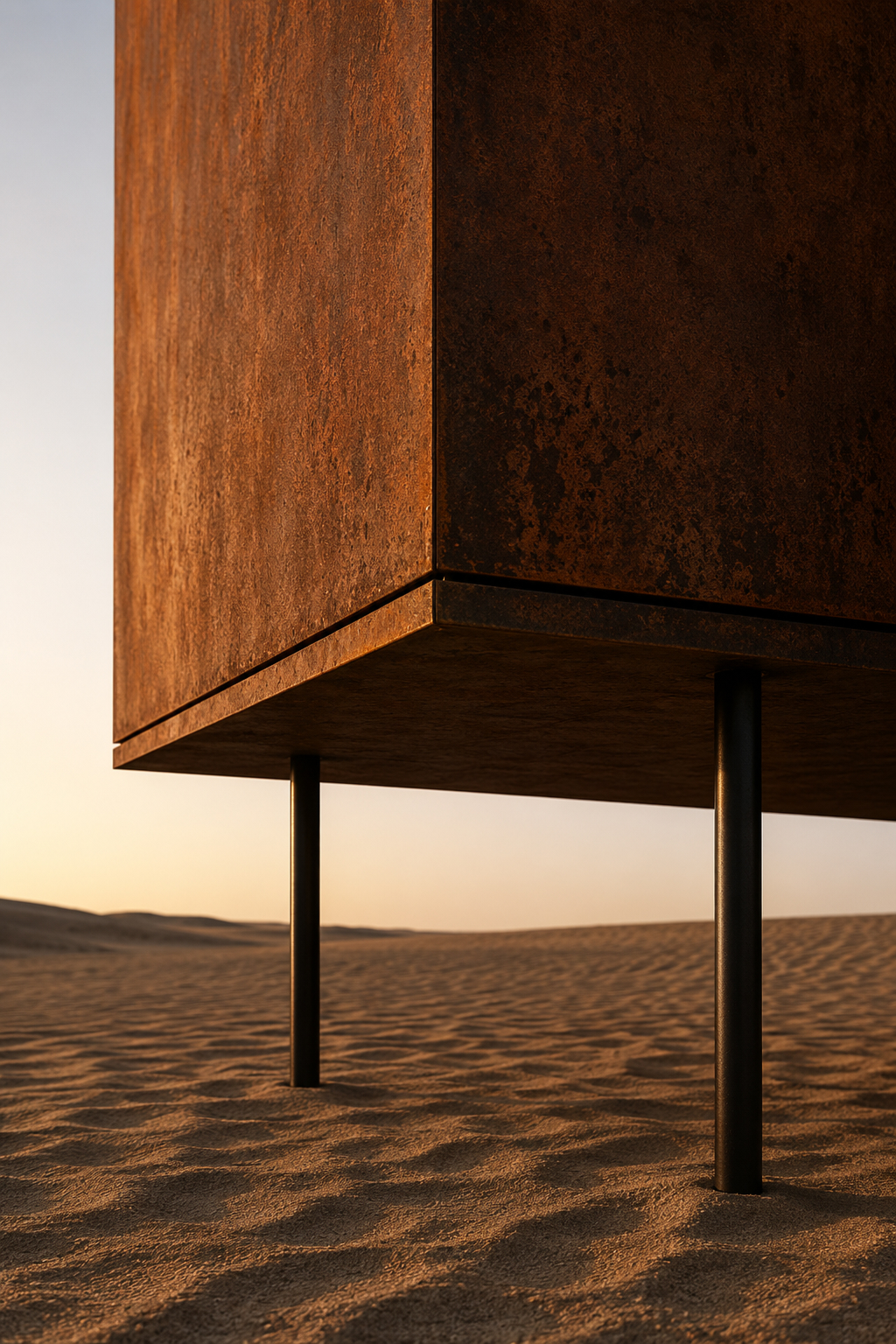
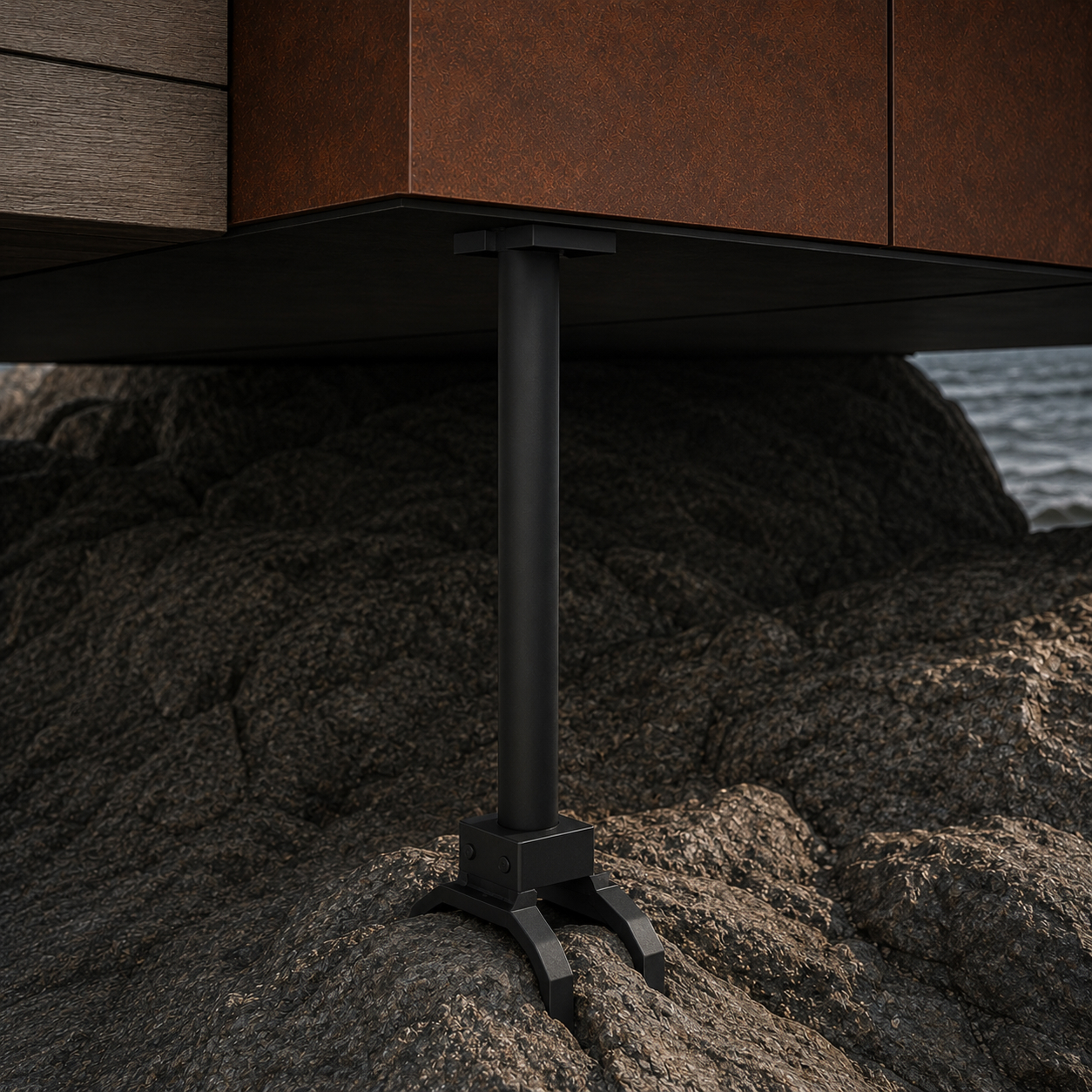
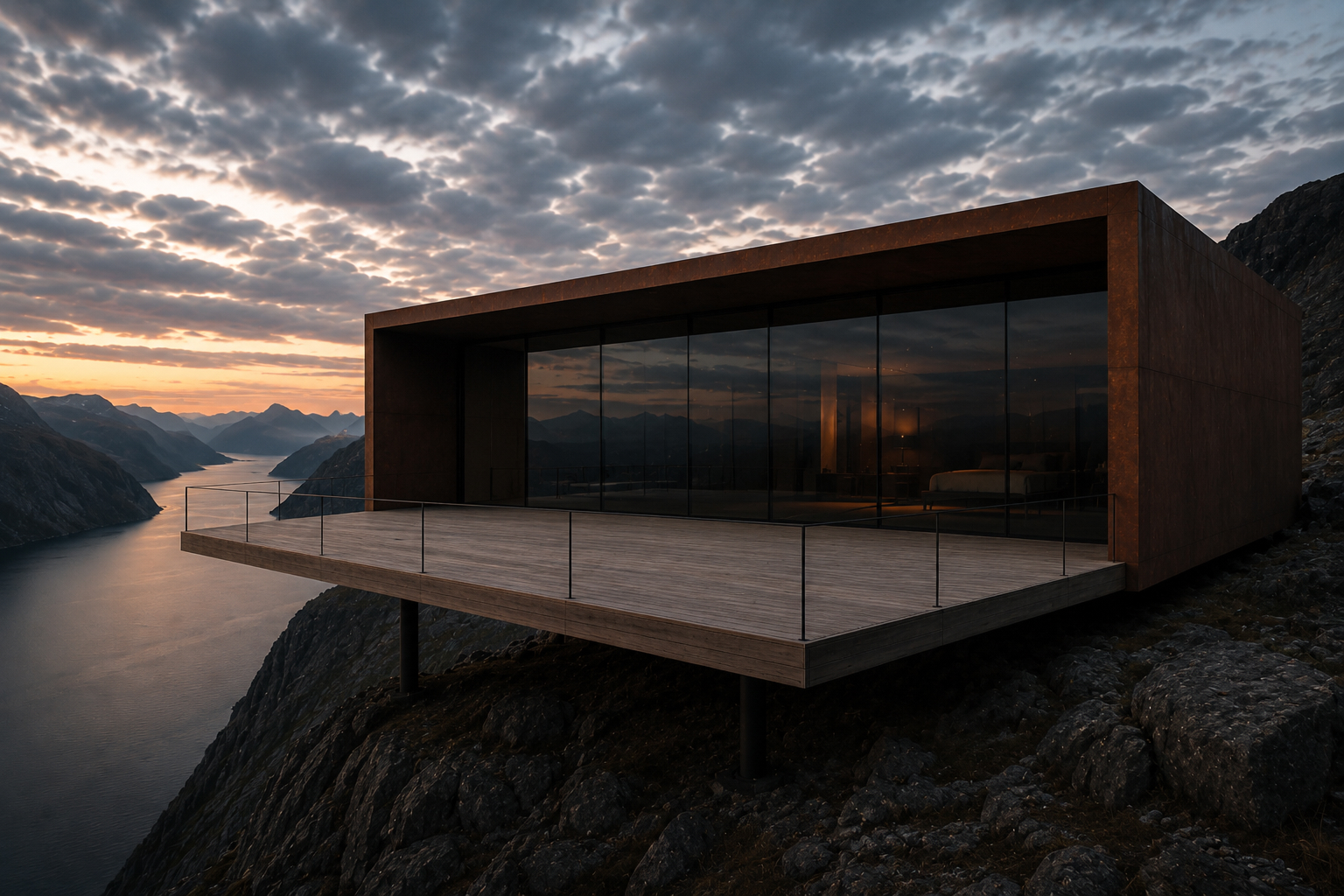
Orium is a single design, engineered once and then set into twelve different worlds. The ring stands on slim legs and touches the ground lightly, so the same structure can rest on granite, sand, a lava field or a salt flat without being redrawn.
Only three things change between editions: how the ring is anchored, how it is sealed against that climate, and which way the residences are turned to face the element. Everything else is held identical.
A residence, not a room.
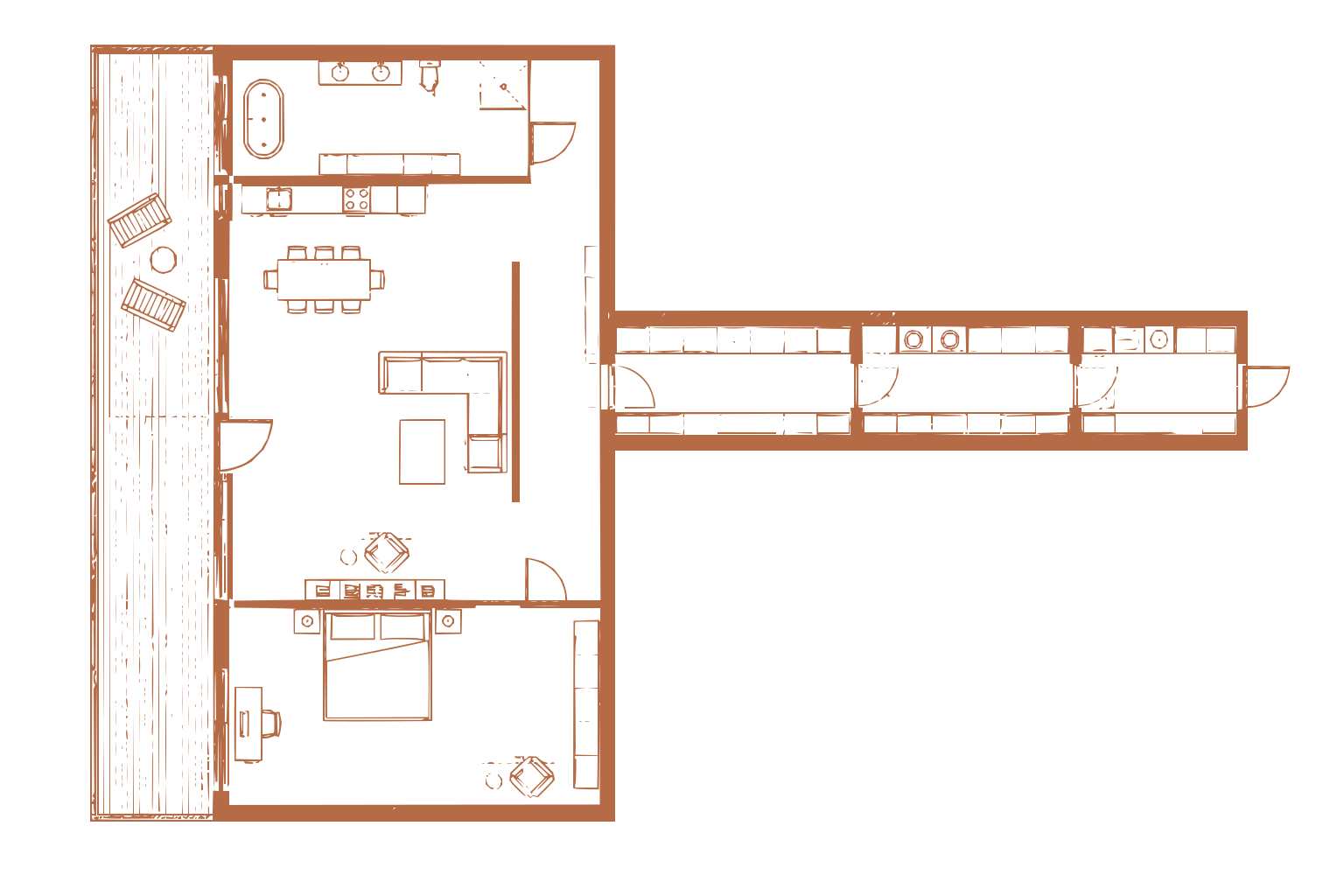
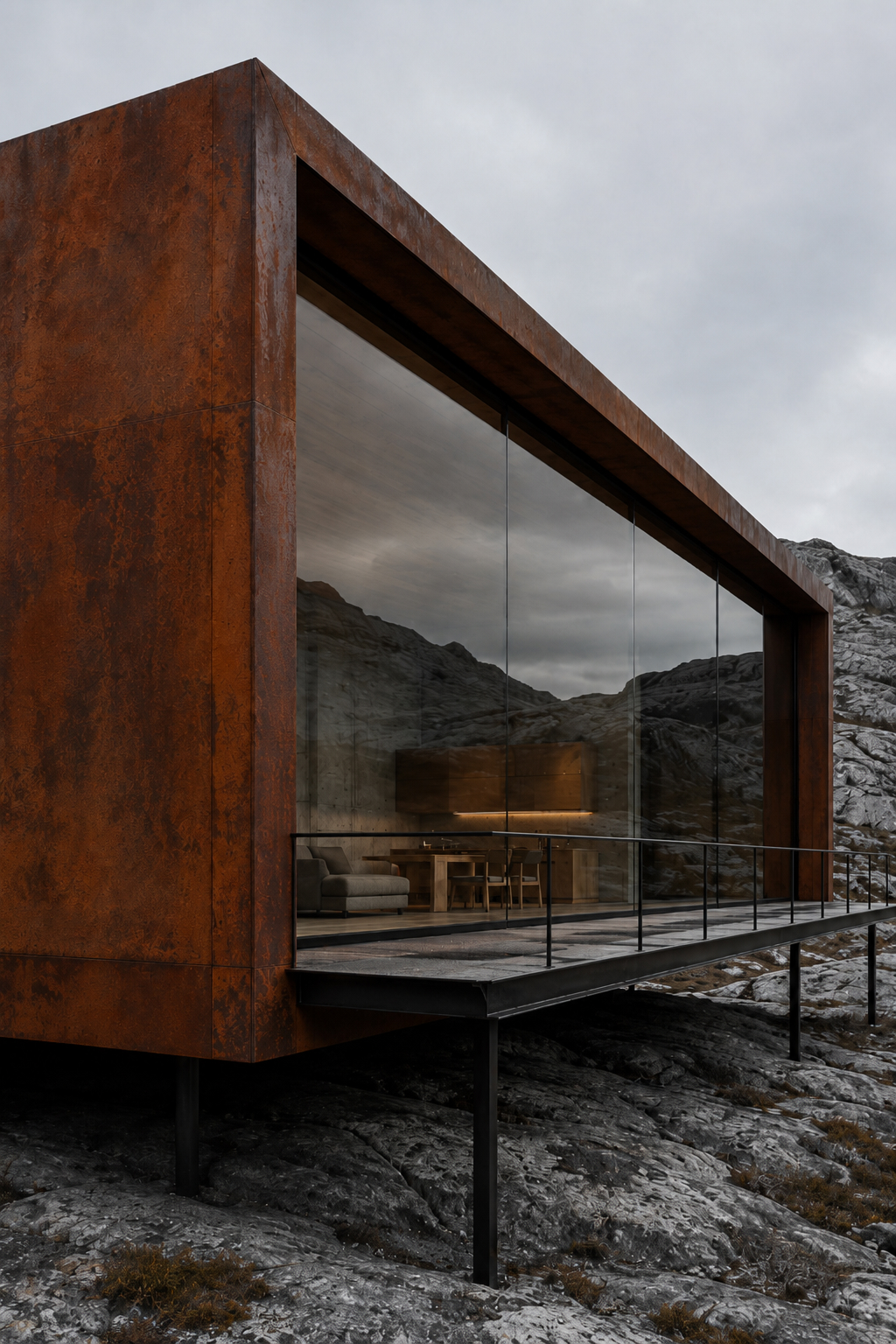
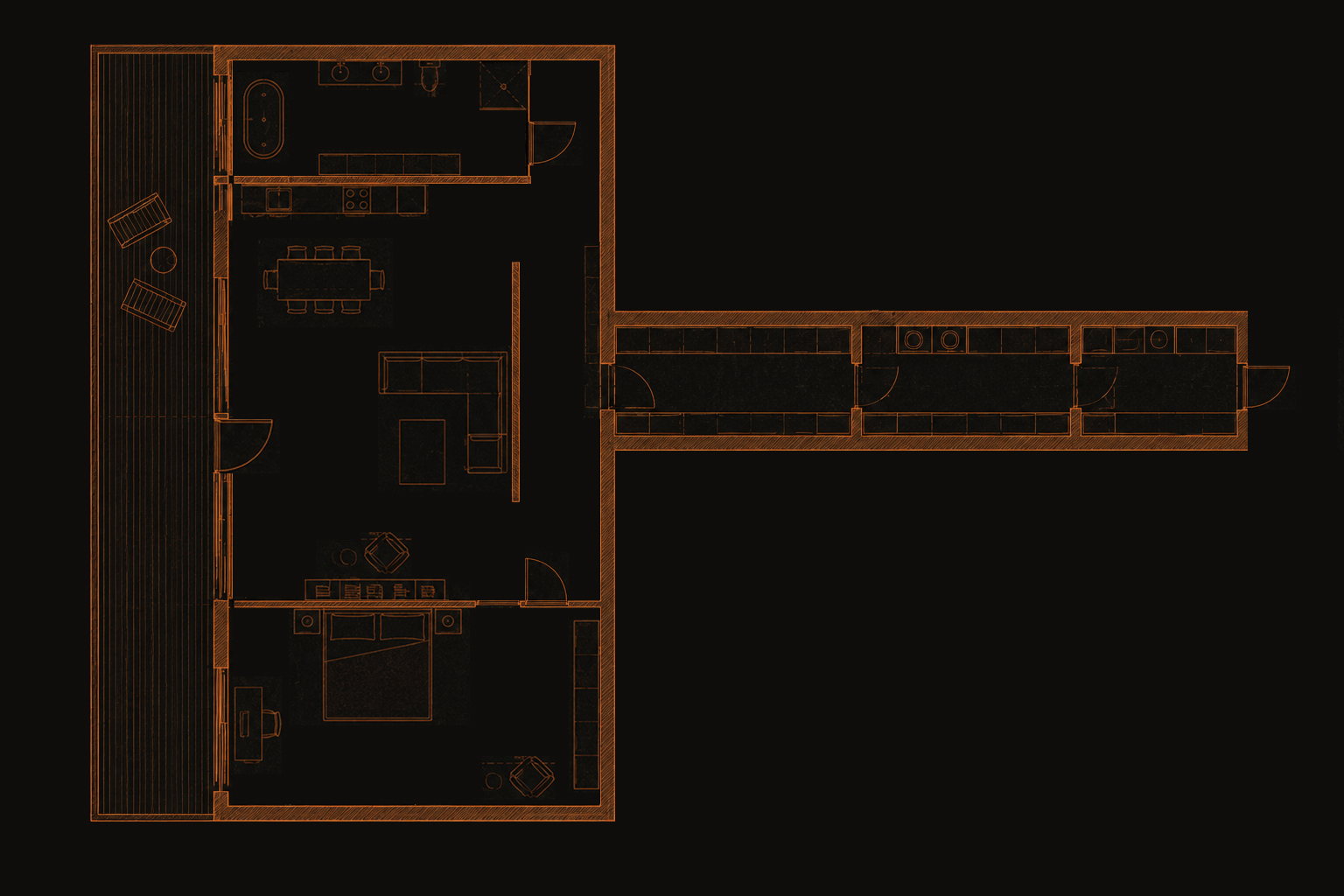
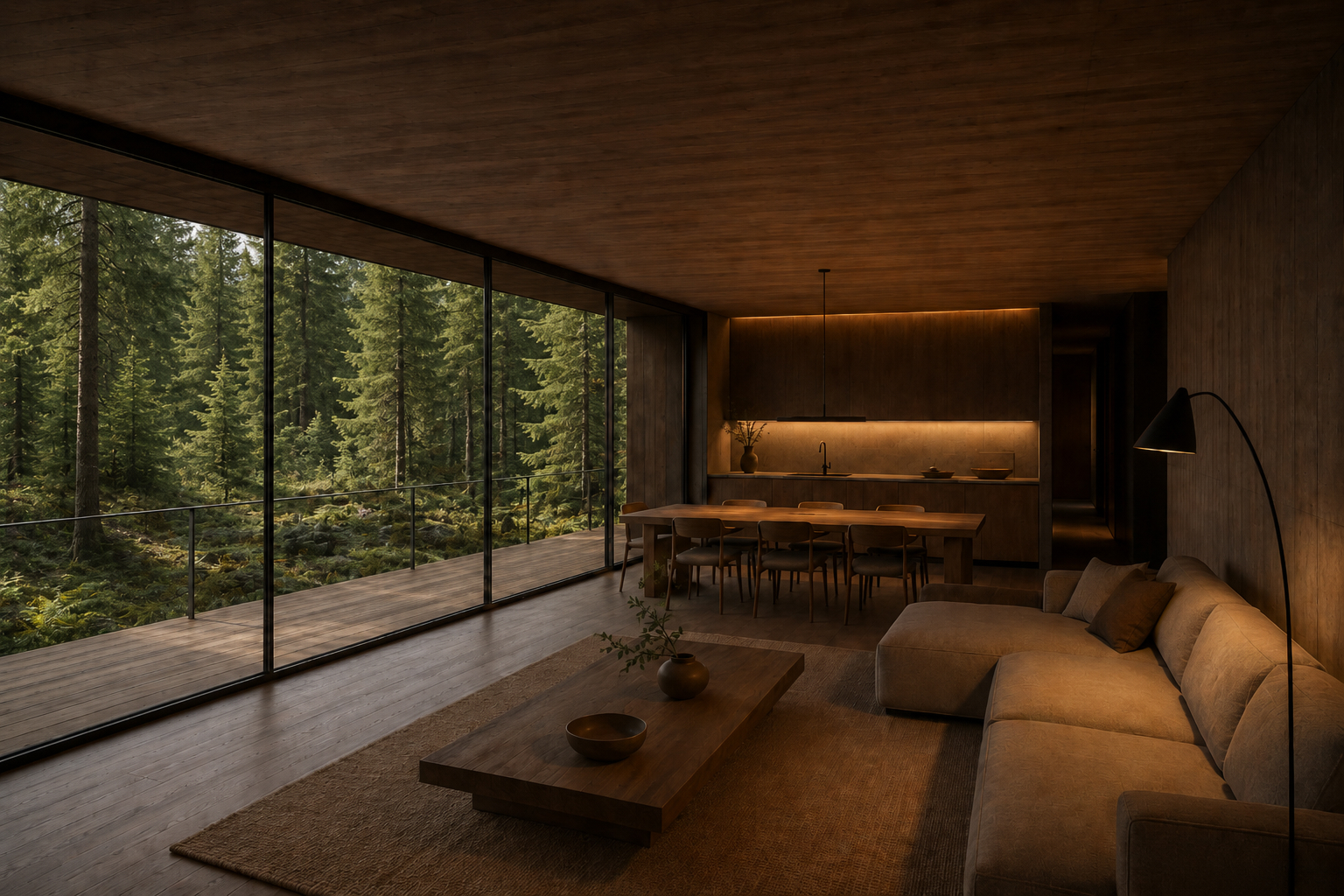
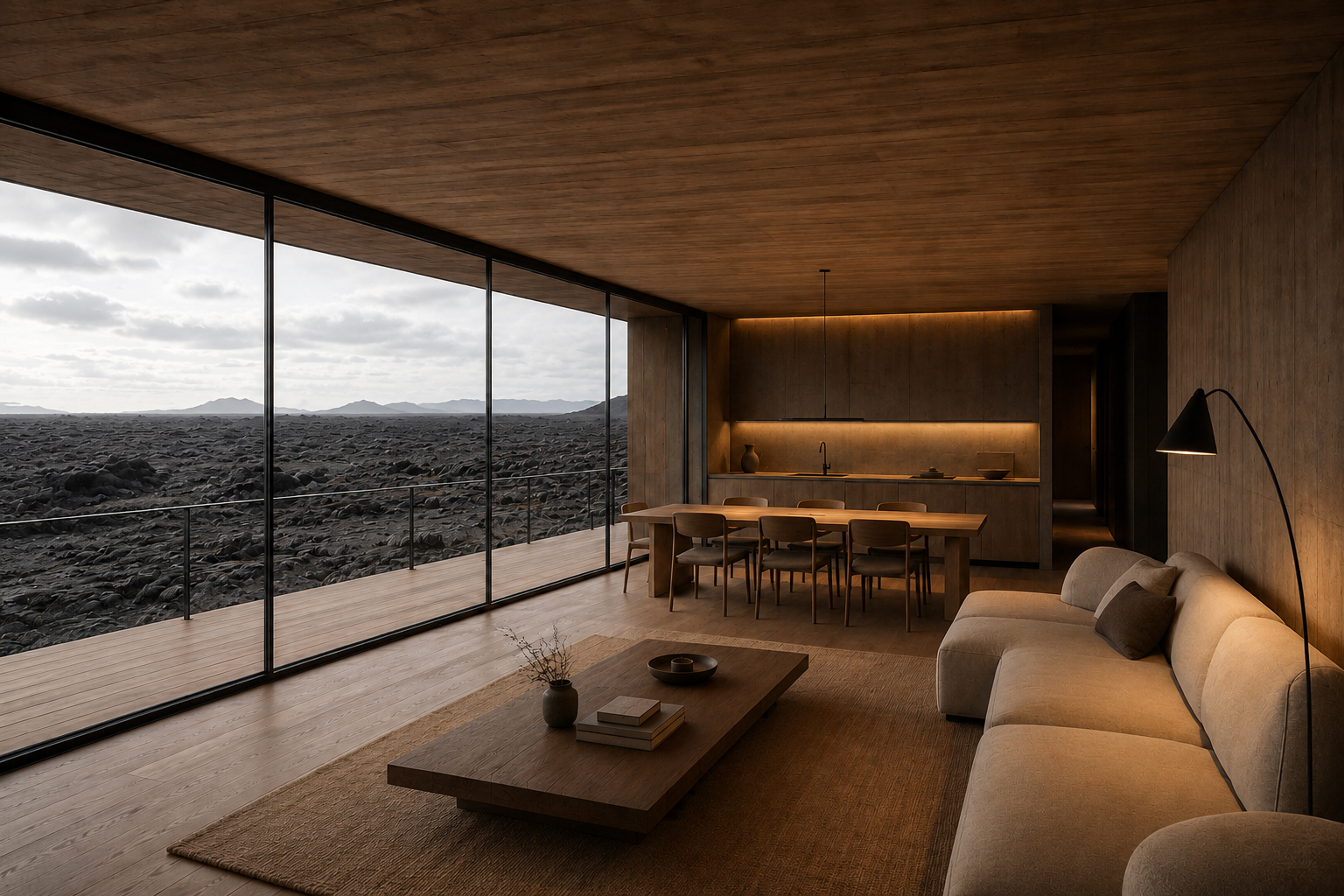
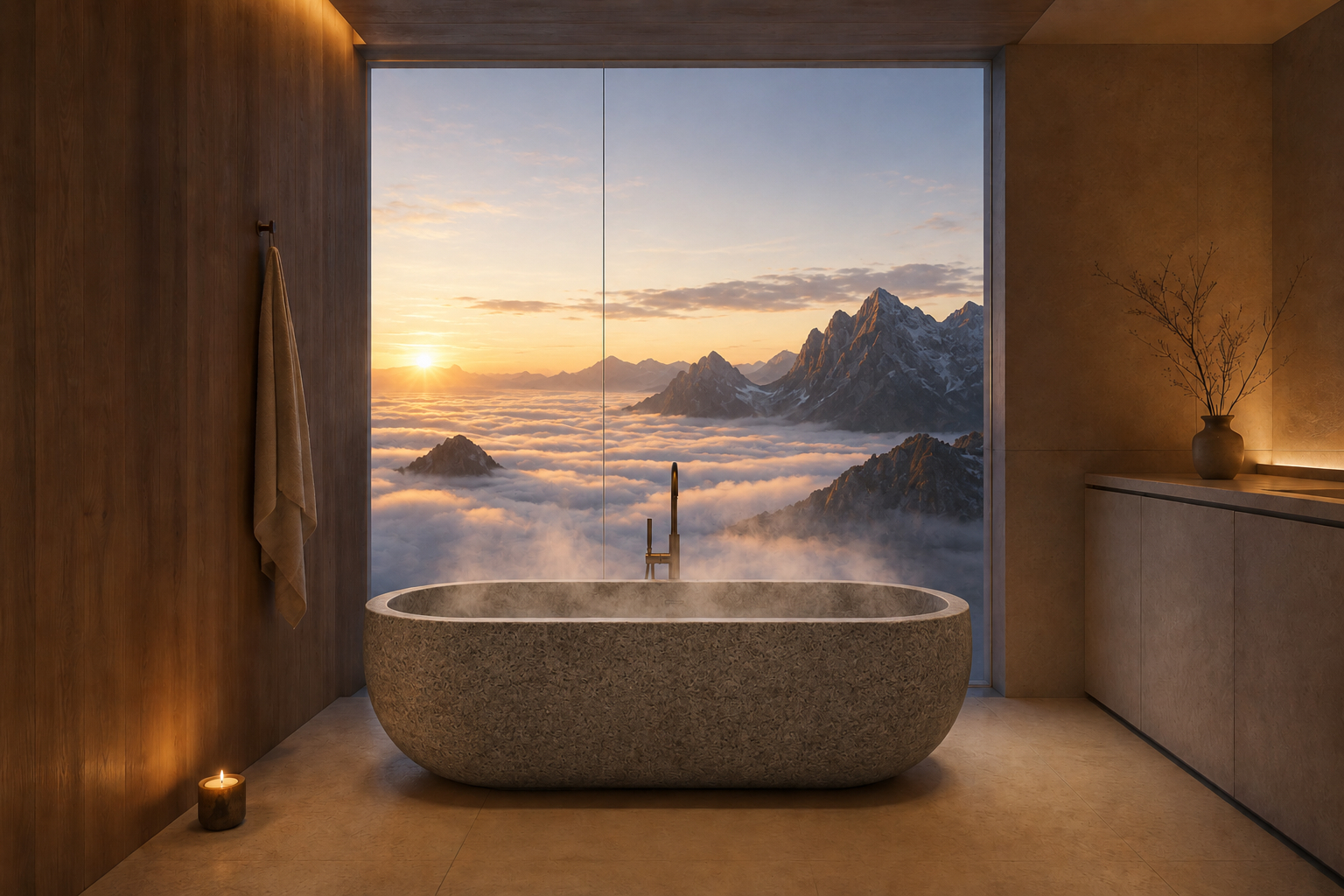
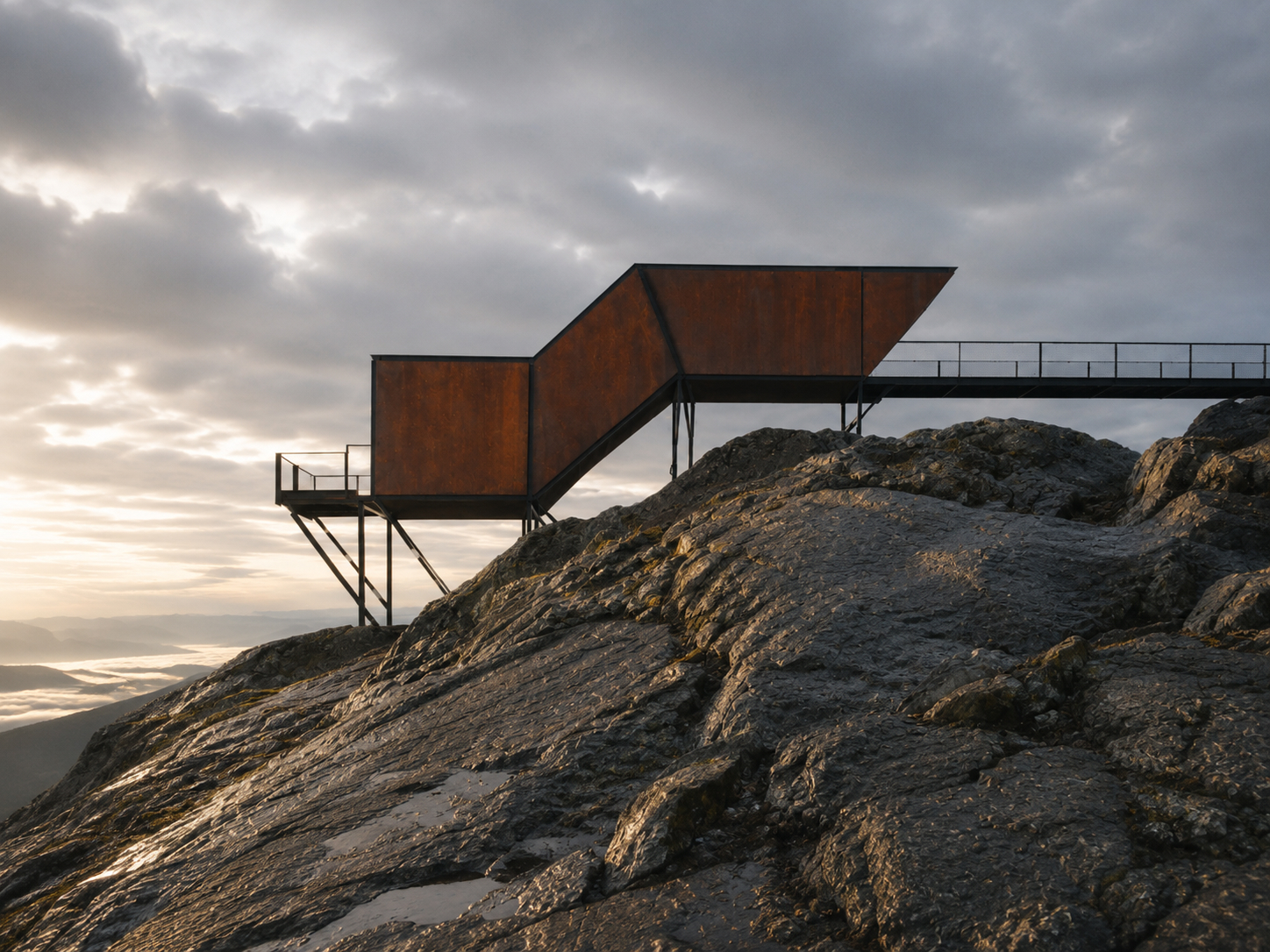
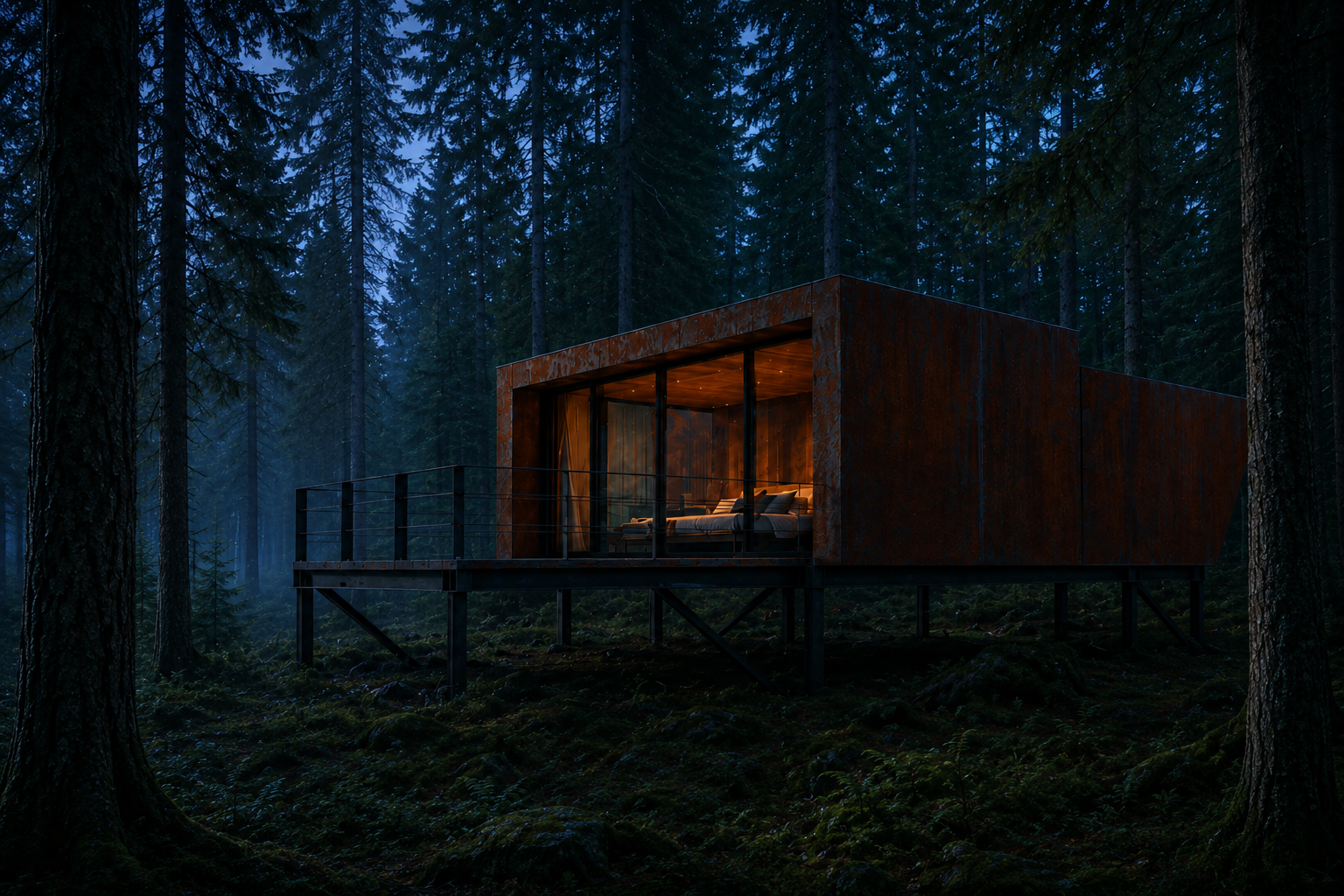
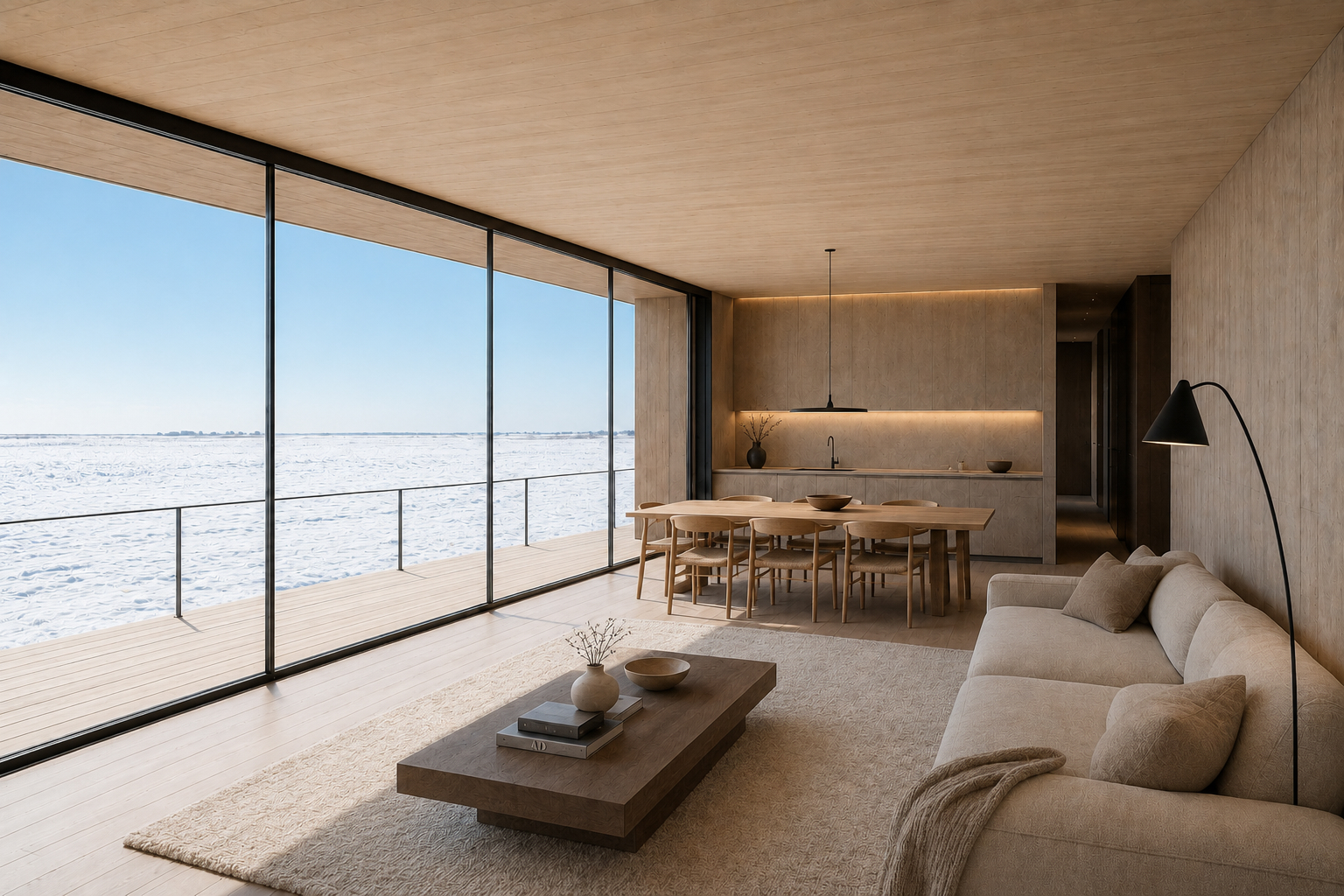
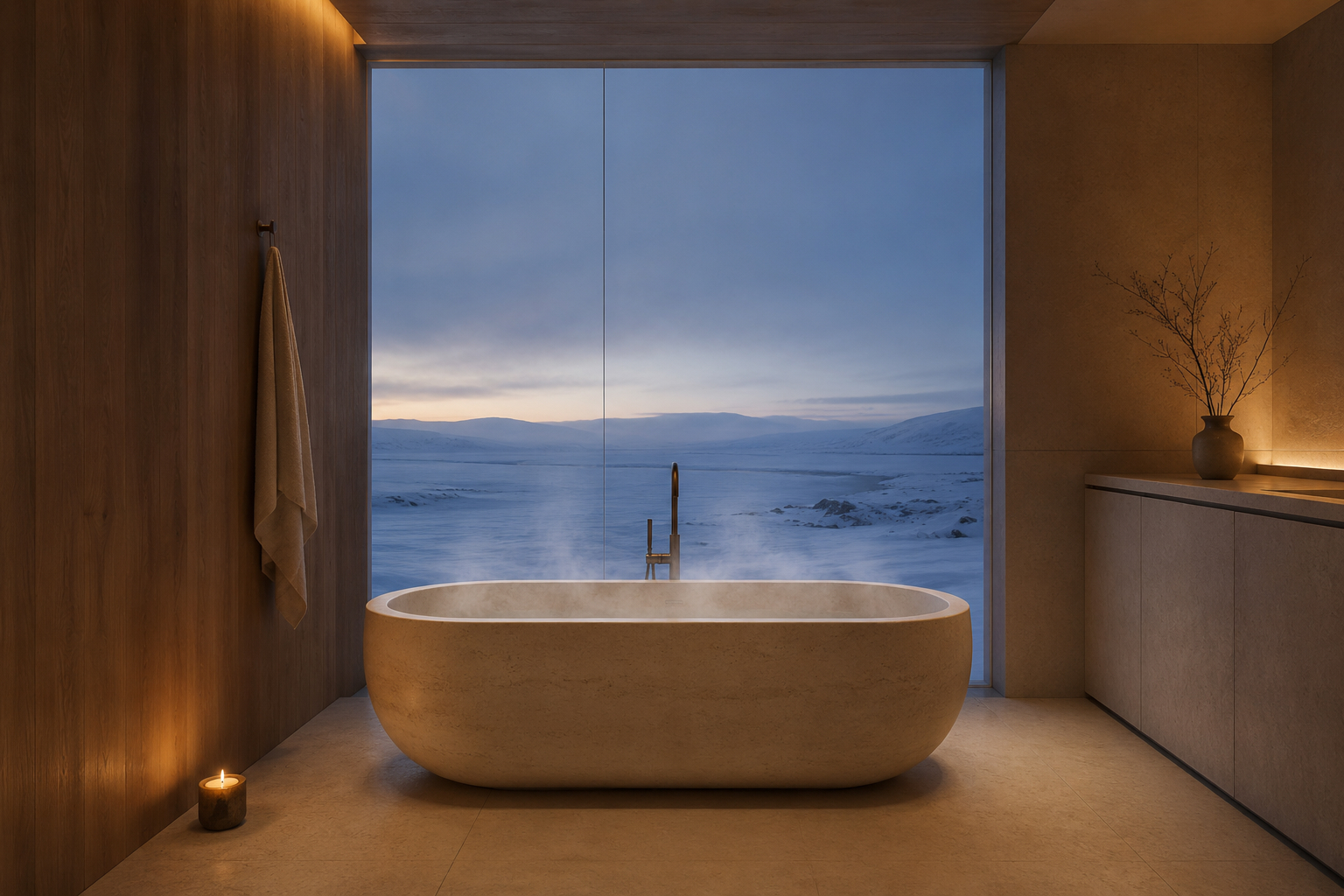
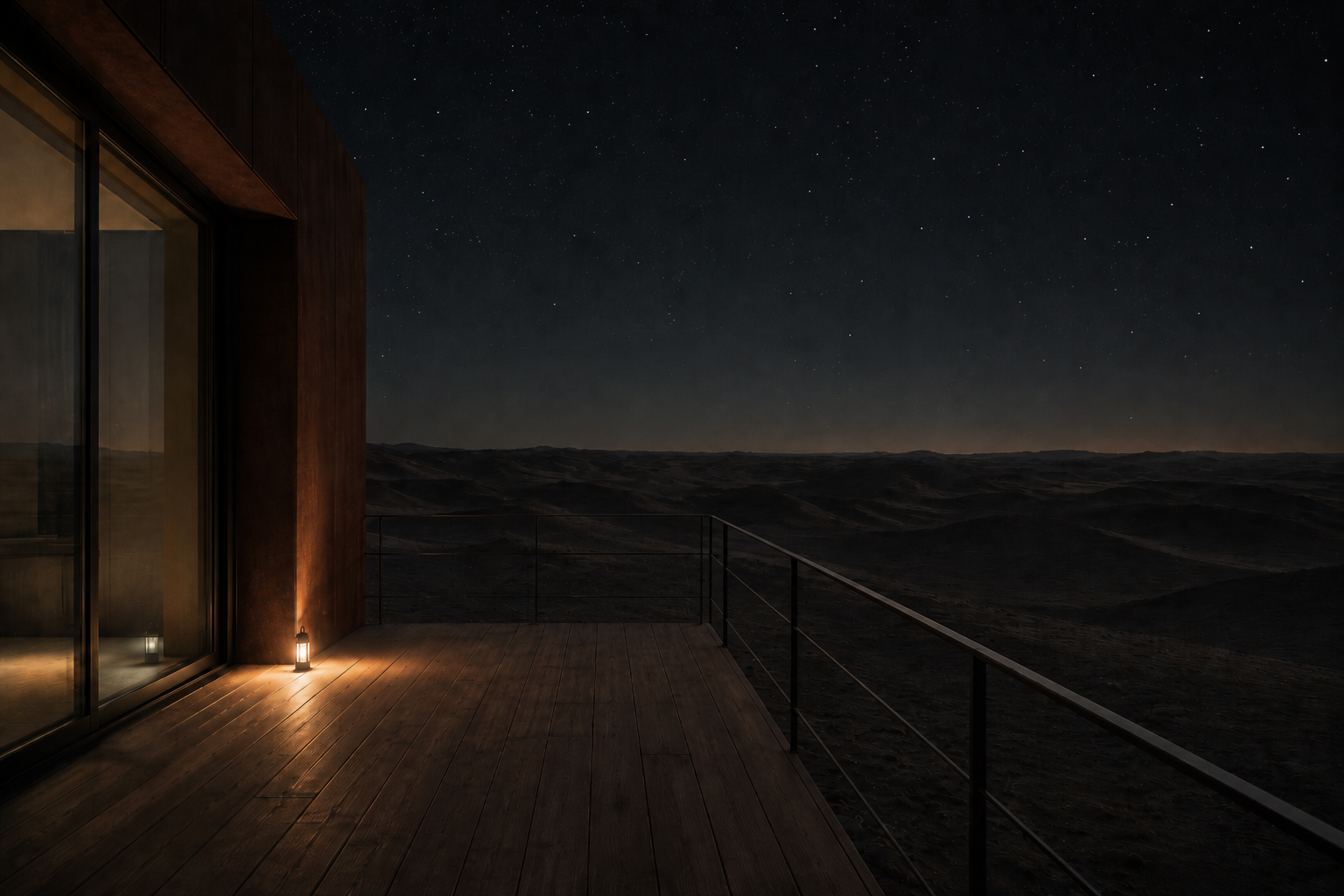
Each residence is a T in plan: a narrow spine bridges in from the ring, then opens into a single wide room that reaches out toward the element. One full-height glass wall and a terrace face the view. There are no other windows, because there is nothing else you are meant to look at.
Inside it is warm and low-lit: wood, wool, one fire, nothing on display. Every system is hidden. It is sized for long stays and deep work, far closer to a private apartment than a hotel room.
Everything shared, a walk away.
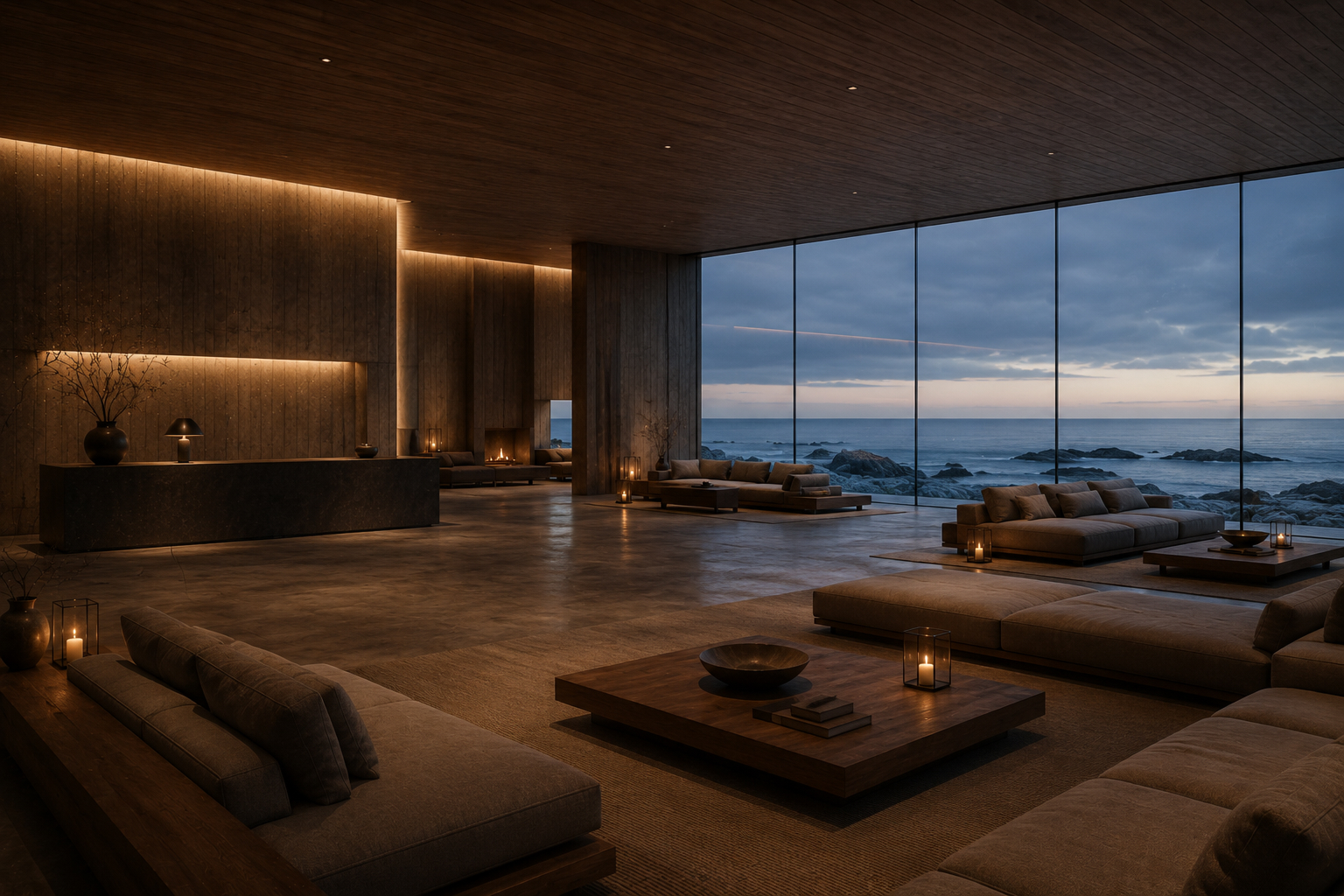
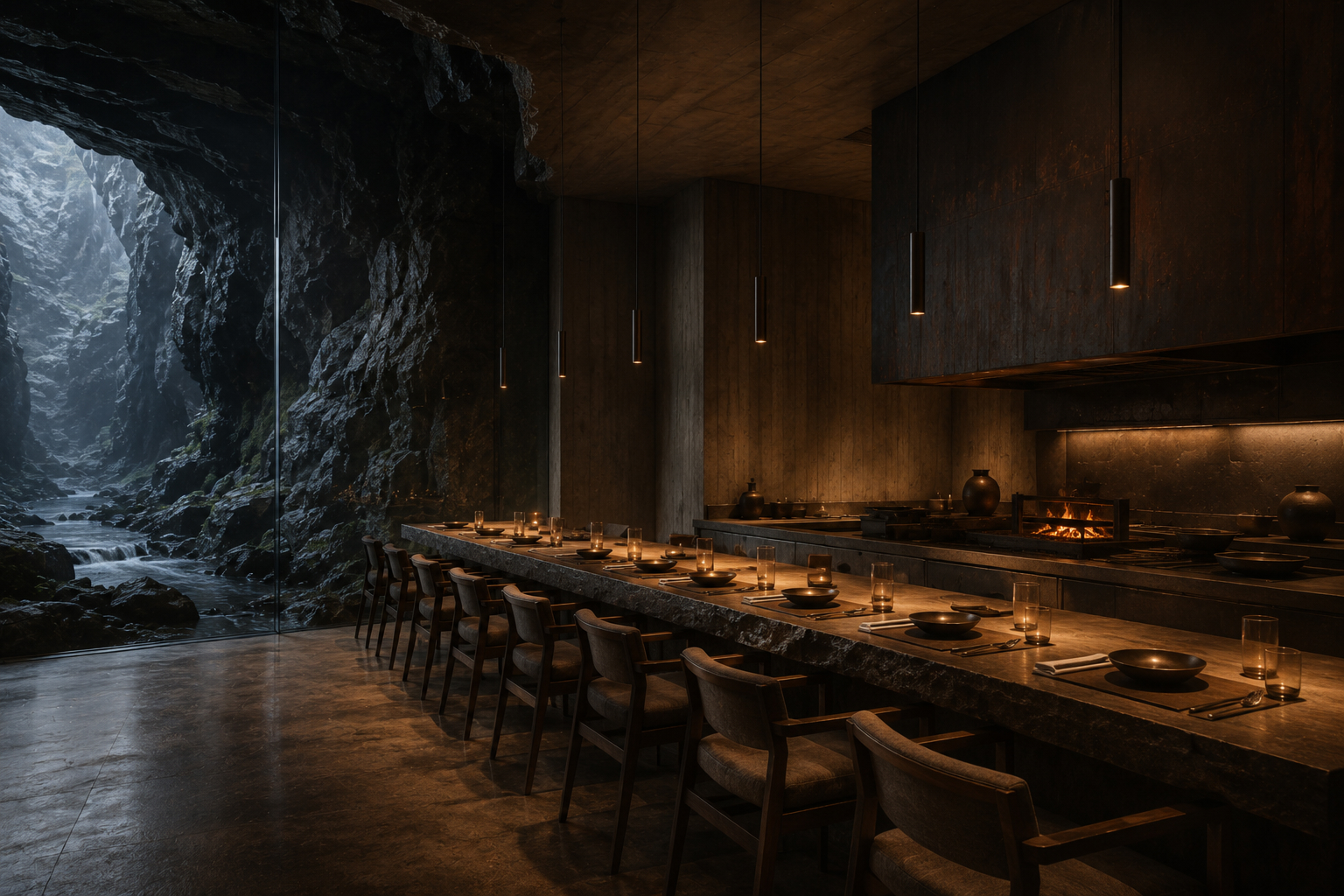
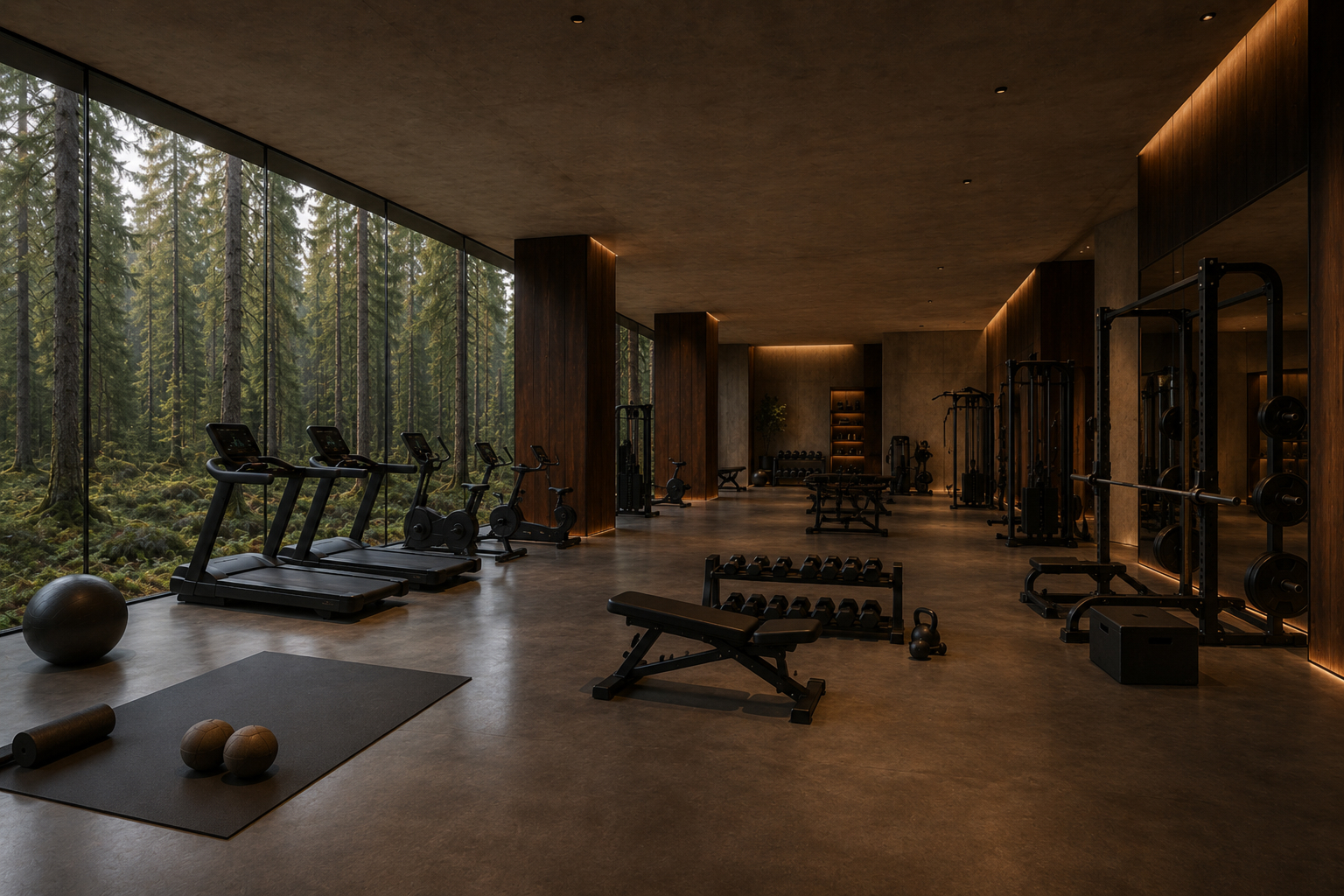
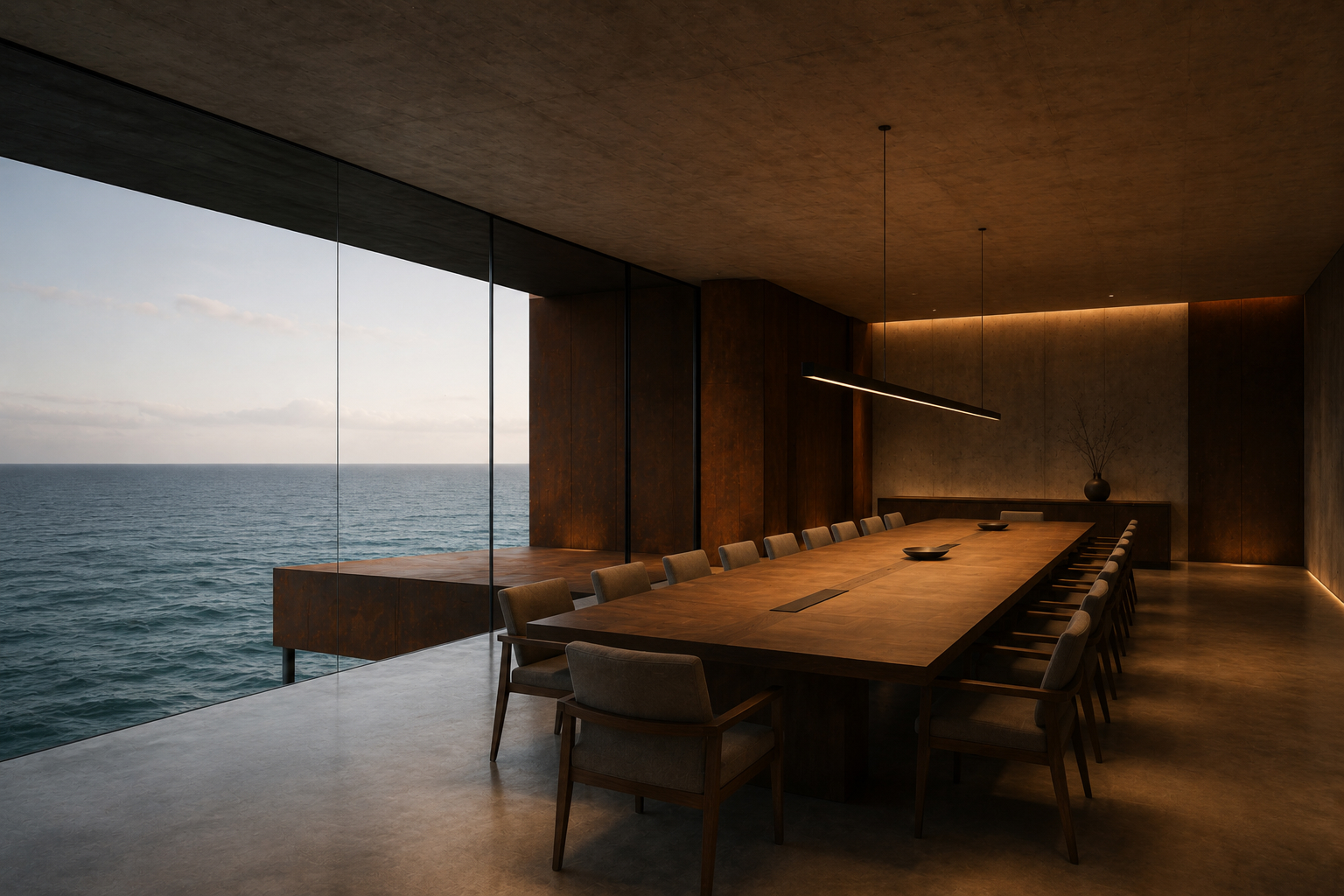
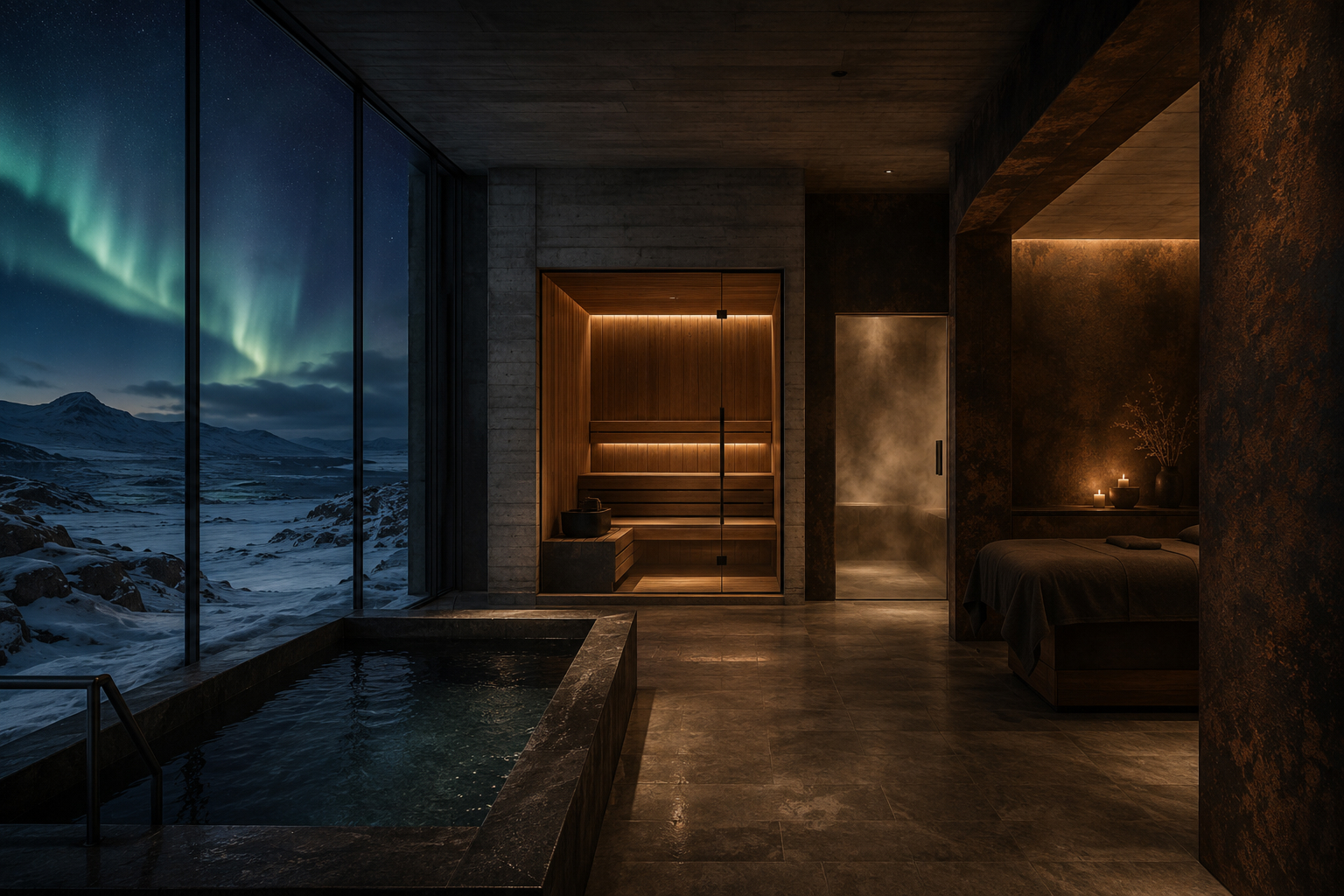
The Commons is a second building set off the ring, reached by the Walk and entered only if you want it. It holds a private restaurant and bar, a gym and treatment rooms, a library, and a quiet boardroom for the few who bring their people with them. Staffed, stocked to your brief and yours alone, it is the one place at Orium built for company, kept a deliberate distance from the residences so that solitude stays the default and never the obligation.
A short, honest list.
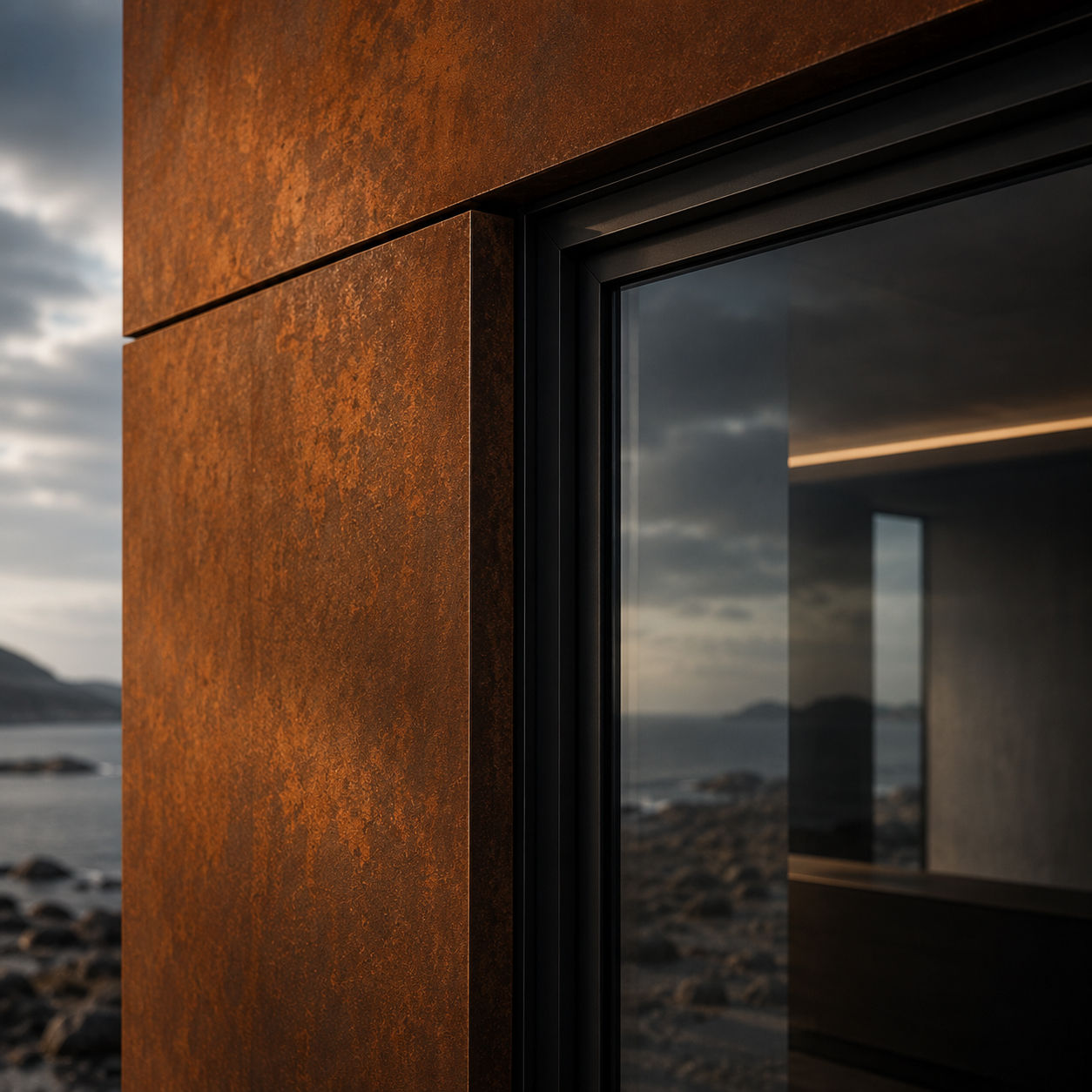
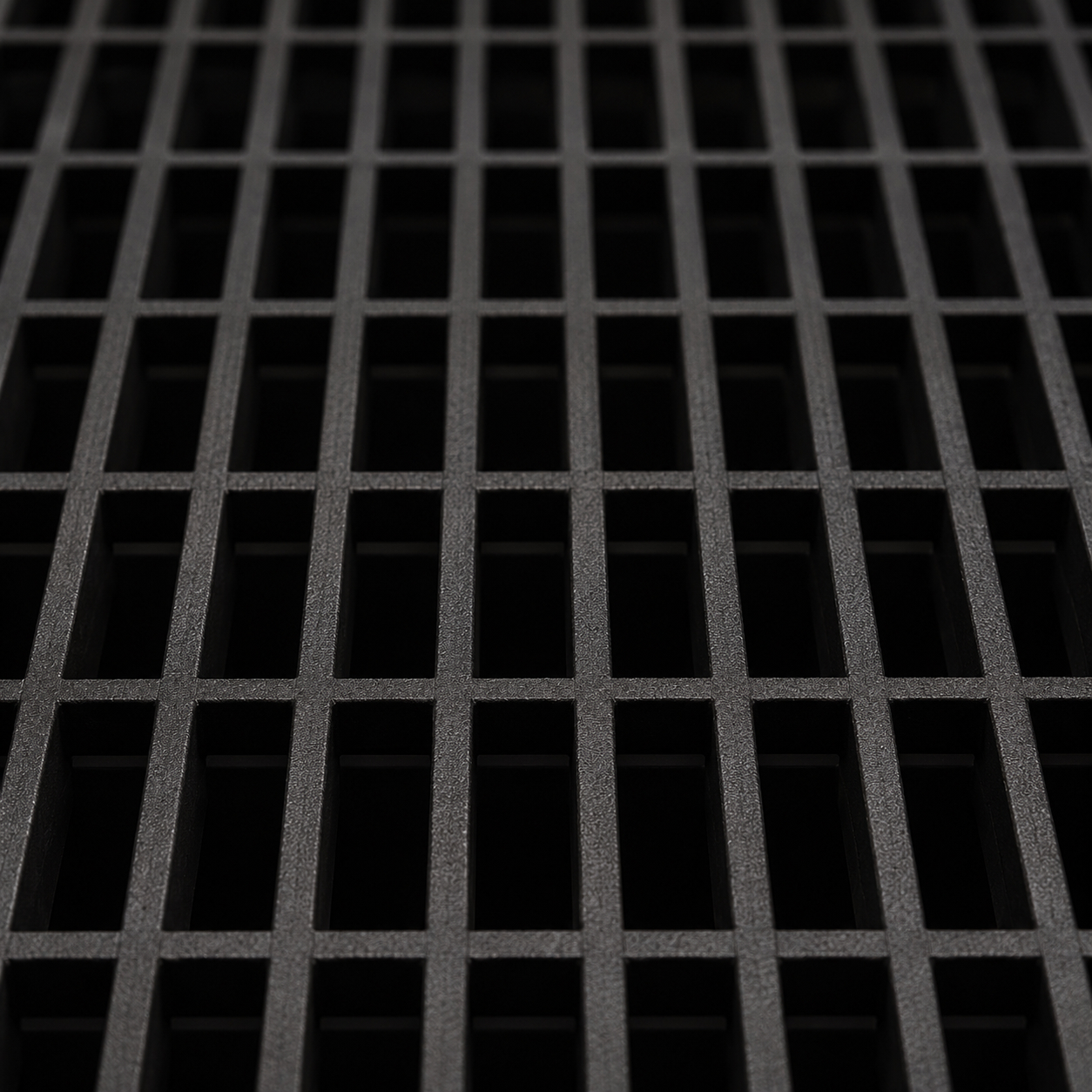
Orium is built from a few materials left to age rather than finished to hide them. Steel weathers, glass darkens, timber warms. Nothing is painted to look like something else.
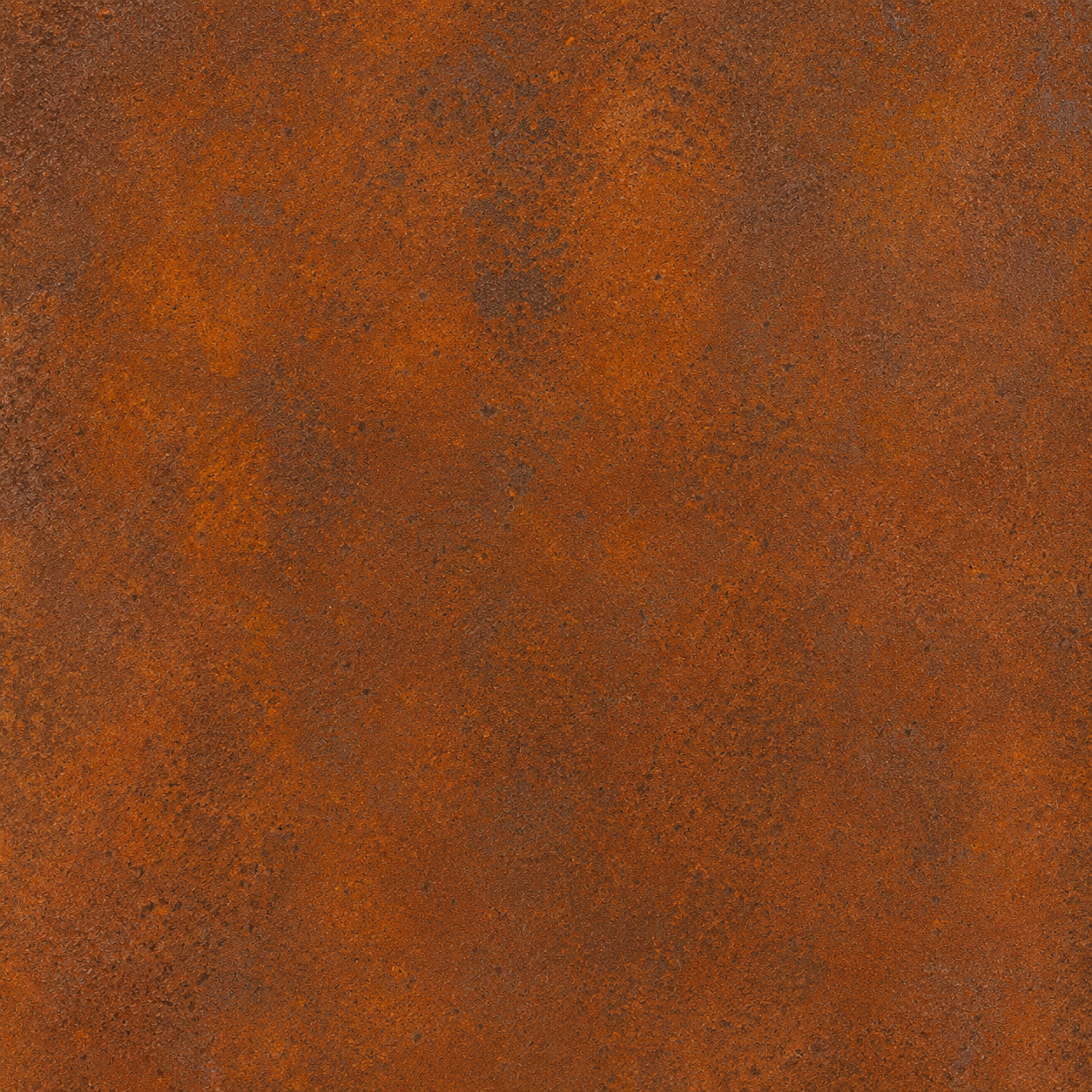

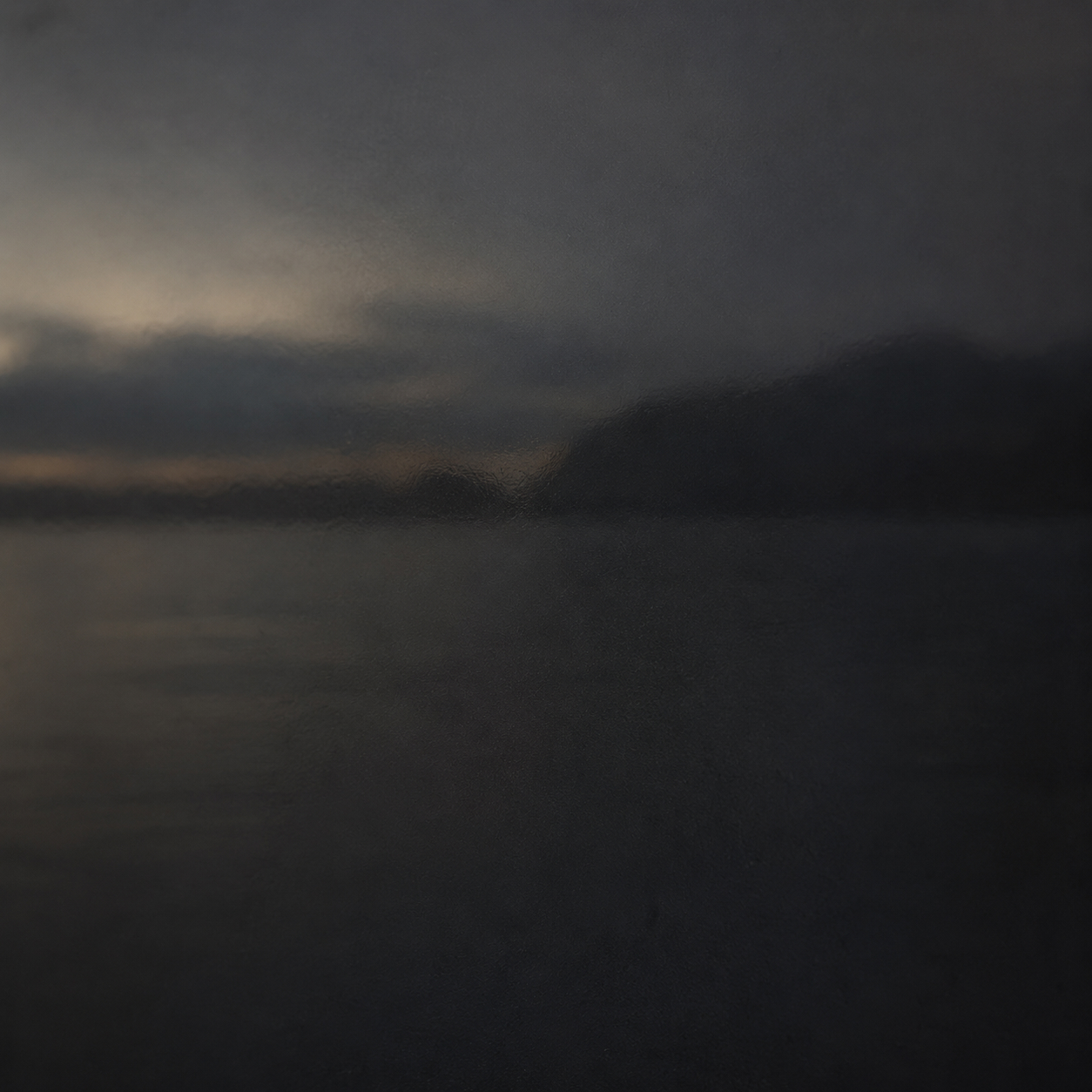
The steel arrives already rusting. Within a season the ring takes the colour of the ground it stands on, until the structure reads as something the land grew rather than something delivered to it.
Built to make you disappear.
What Orium offers is not a view, or a number of nights. It is the rarest thing a person at the top of anything can buy: to be completely unreachable, completely unseen, and completely alone, for as long as they want. Everything here exists to protect that.
The opposite of being seen.
Most luxury is about being seen well. Orium is the opposite. You come to not be reachable, not be recognised, not be performed at: simply absent from the world for a few days or a few weeks, in a place built to make that comfortable.
The front desk does not learn your name; the building sees you arrive and forgets. For once, nothing here wants anything from you.
Why it exists.
Orium began with one observation: the more a person carries, the less they are ever truly left alone. Every room has a door someone can knock on. Every device has a way in. So we built a place with neither, and made that the entire point.
No screens in the common rooms, no schedule, no programme, no shared core to be pulled into. The building asks nothing of you. That absence of demand is the luxury.
Who comes here.
Orium is built for people who carry a great deal and rarely get to set it down: founders, executives, writers, anyone whose attention is always being claimed. It rewards long stays. The point was never a weekend away; it is enough uninterrupted time for the noise to actually stop.
The autonomy that keeps Orium running in the middle of nowhere is the same autonomy that keeps it private. A building that needs nothing from the outside world also owes nothing to it, including any record of who is inside.
It runs itself.
Every Orium runs entirely on its own. Power, water, heat, food and security are made and managed on site, with no cable, pipe or signal from the outside. Partly that is necessity: there is usually nothing for a hundred kilometres in any direction. Mostly it is the point. A building that needs nothing cannot be reached, leaned on, or switched off.
Off the grid, on purpose.
Orium is placed where there is nothing: no grid, no mains water, no town. Rather than treat that as a problem to bridge, the design treats it as the product. Each resort carries everything it needs and answers to no local system.
It keeps working through a storm that takes out an entire region, and it leaves no trace in anyone else's records, because no one else's system is ever involved.
Reading the rating.
Every edition carries an autonomy rating: how long it can run with nothing coming in at all. No delivery, no grid, no signal. The number is the floor, not the ceiling.
Power that never runs out.
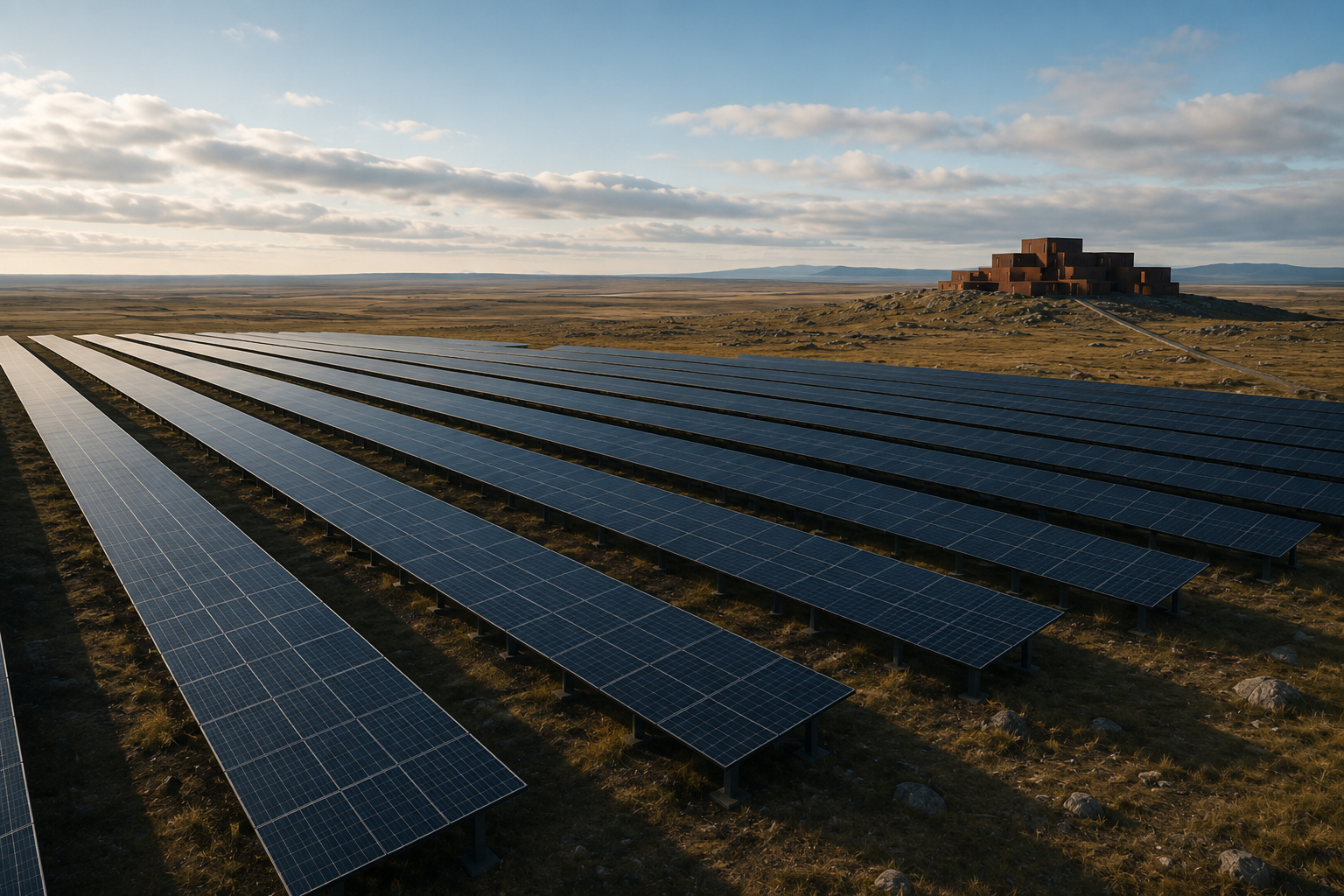
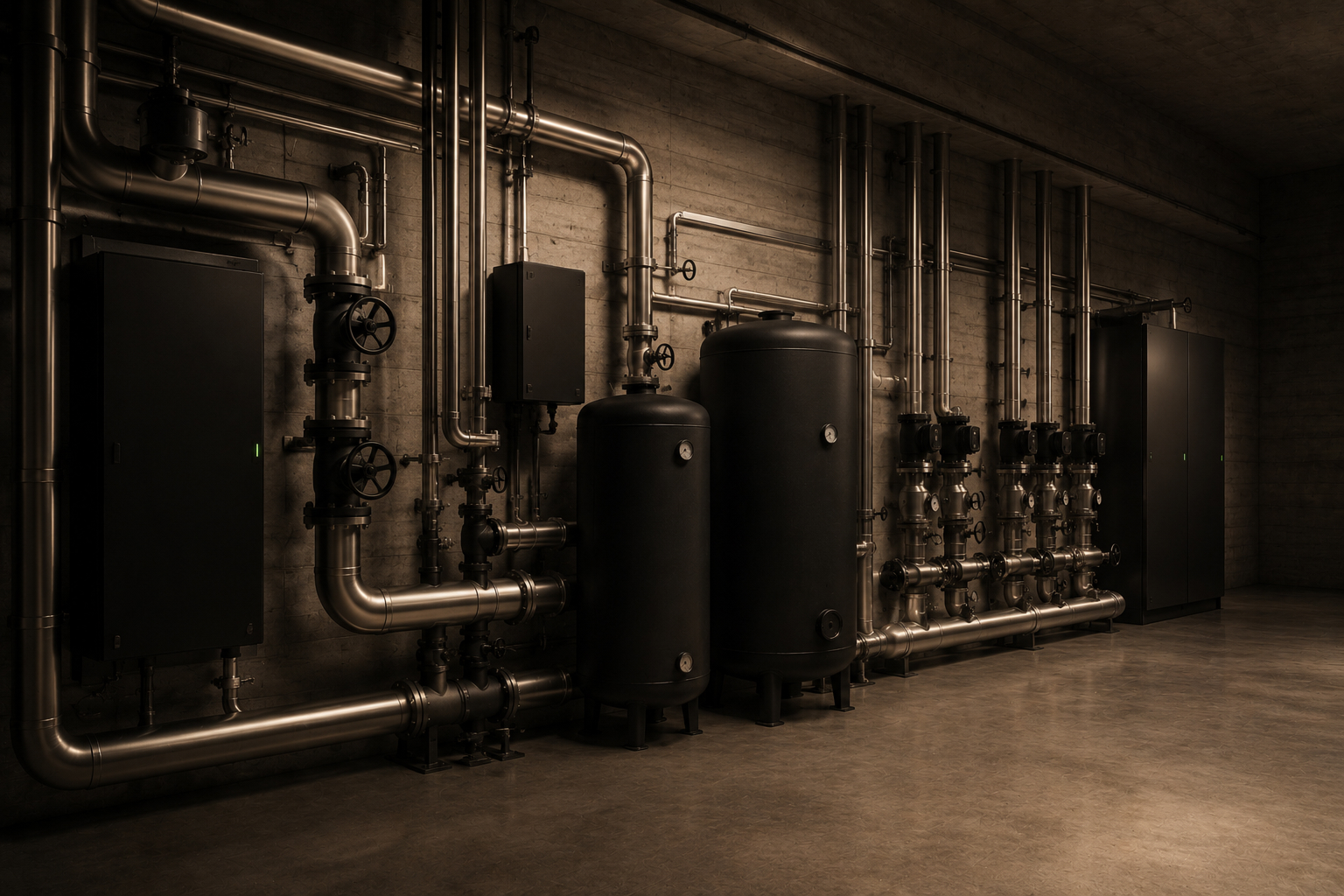
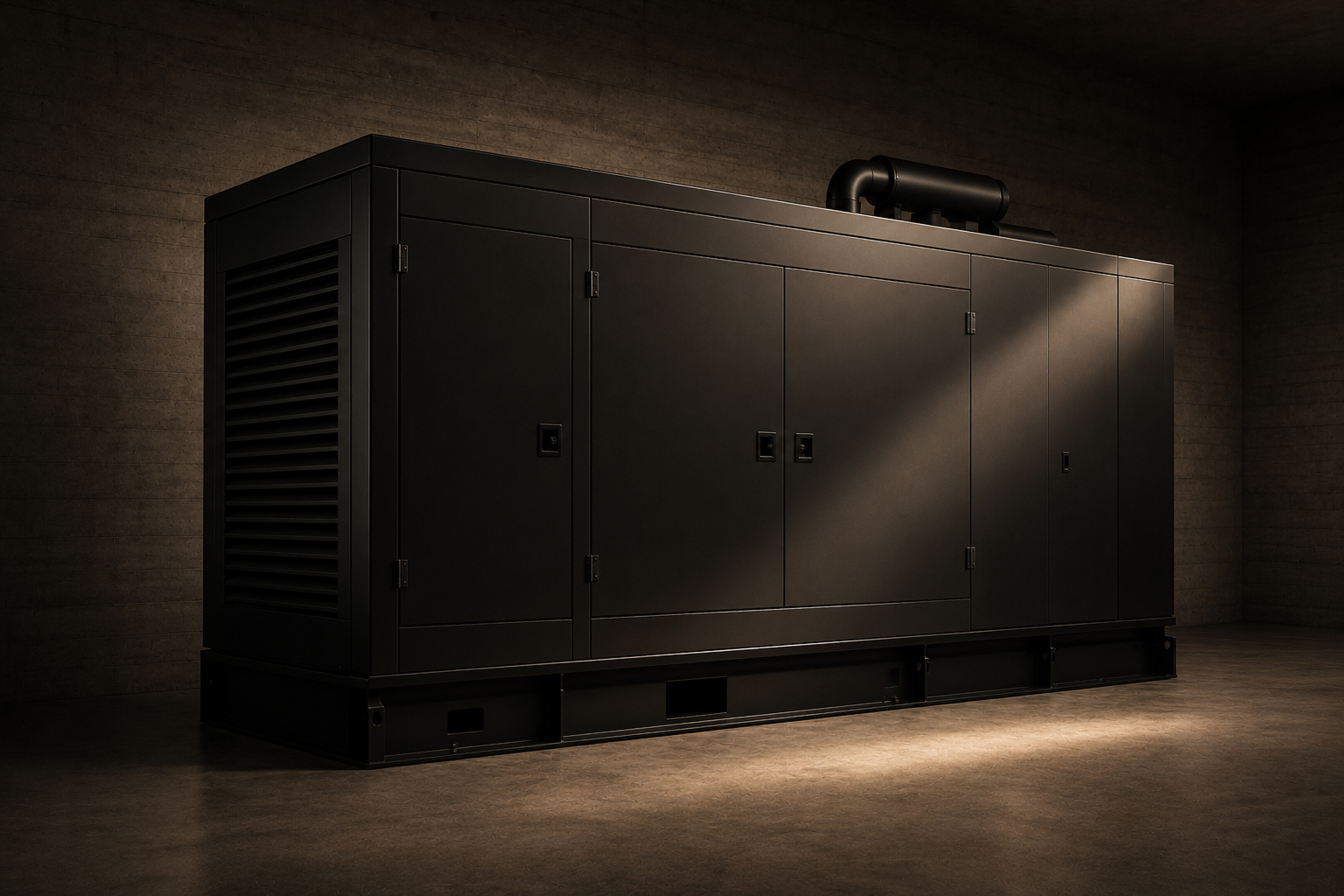
Power comes from a solar array sized for the darkest week of that latitude, a battery bank big enough to carry the resort through sunless days, and a sealed generator behind both for the worst case. You feel none of it. The lights simply never go out.
In the polar editions the array is oversized for a sun that barely clears the horizon; in the desert it is shaded and cooled. The rule is the same everywhere: never run out.
Water, heat, air.
Water is drawn from the most reliable local source (rain, snowmelt, a borehole, or the air itself), then filtered and stored on site. Heat comes from the sun, the ground or stored fuel depending on the edition.
The whole envelope is sealed and tuned to its climate, so the interior holds steady while the weather outside does not. In the snow editions it traps heat; in the desert it sheds it.
Fed from its own ground.
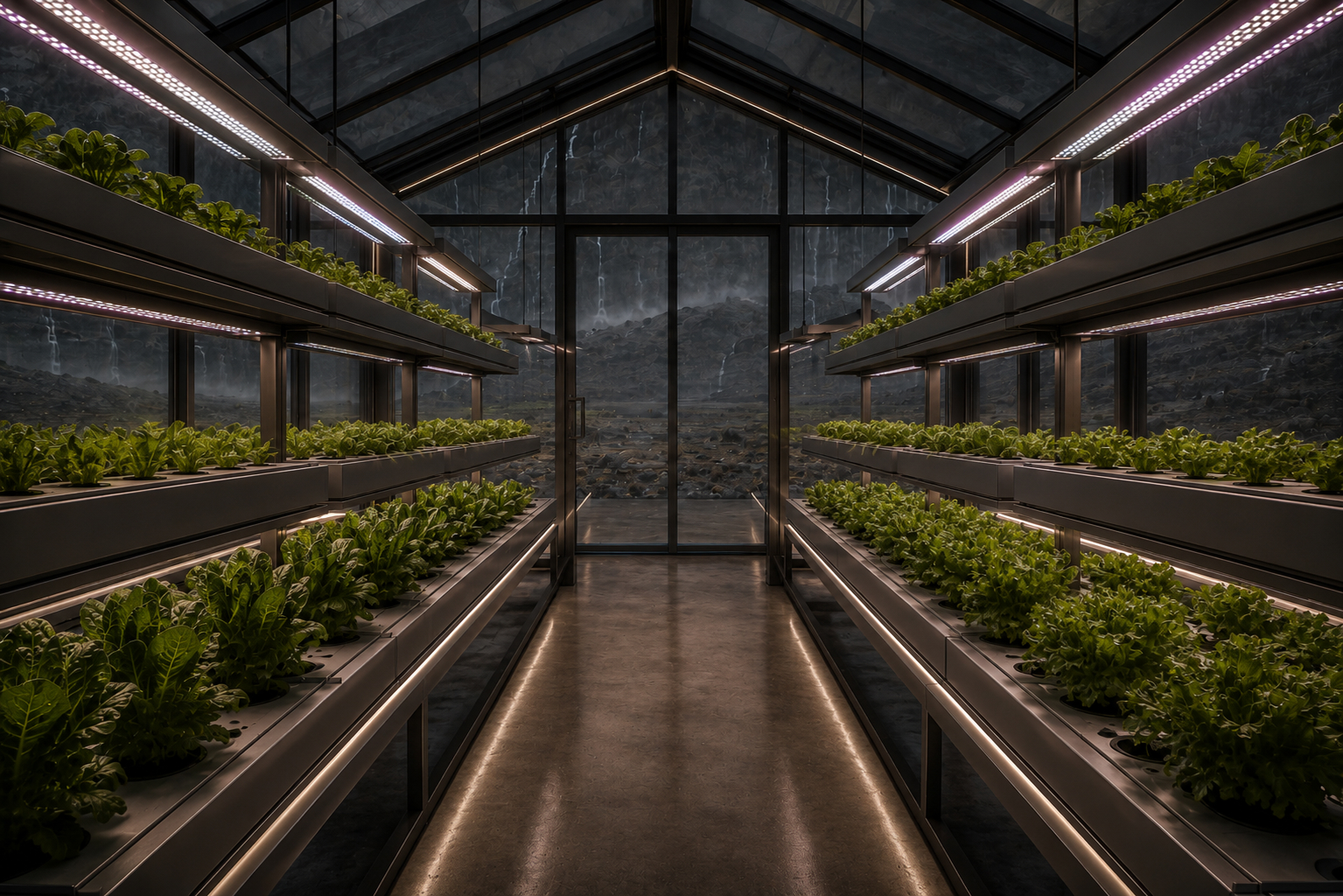
Provisioning is delivered in bulk and held in a deep cellar. Where the biome allows it, a small growing house supplies fresh produce on site, so even total isolation never means going without.
In the harshest editions everything is stored; in the mildest, much of it is grown a few metres from the kitchen.
Left alone, for months.
A fully provisioned Orium can run unattended for months. Its systems watch themselves, hand off cleanly when a part fails, and fall back to safe states rather than off states.
A small remote team can confirm that everything is healthy without ever seeing who is inside.
Orium intelligence.
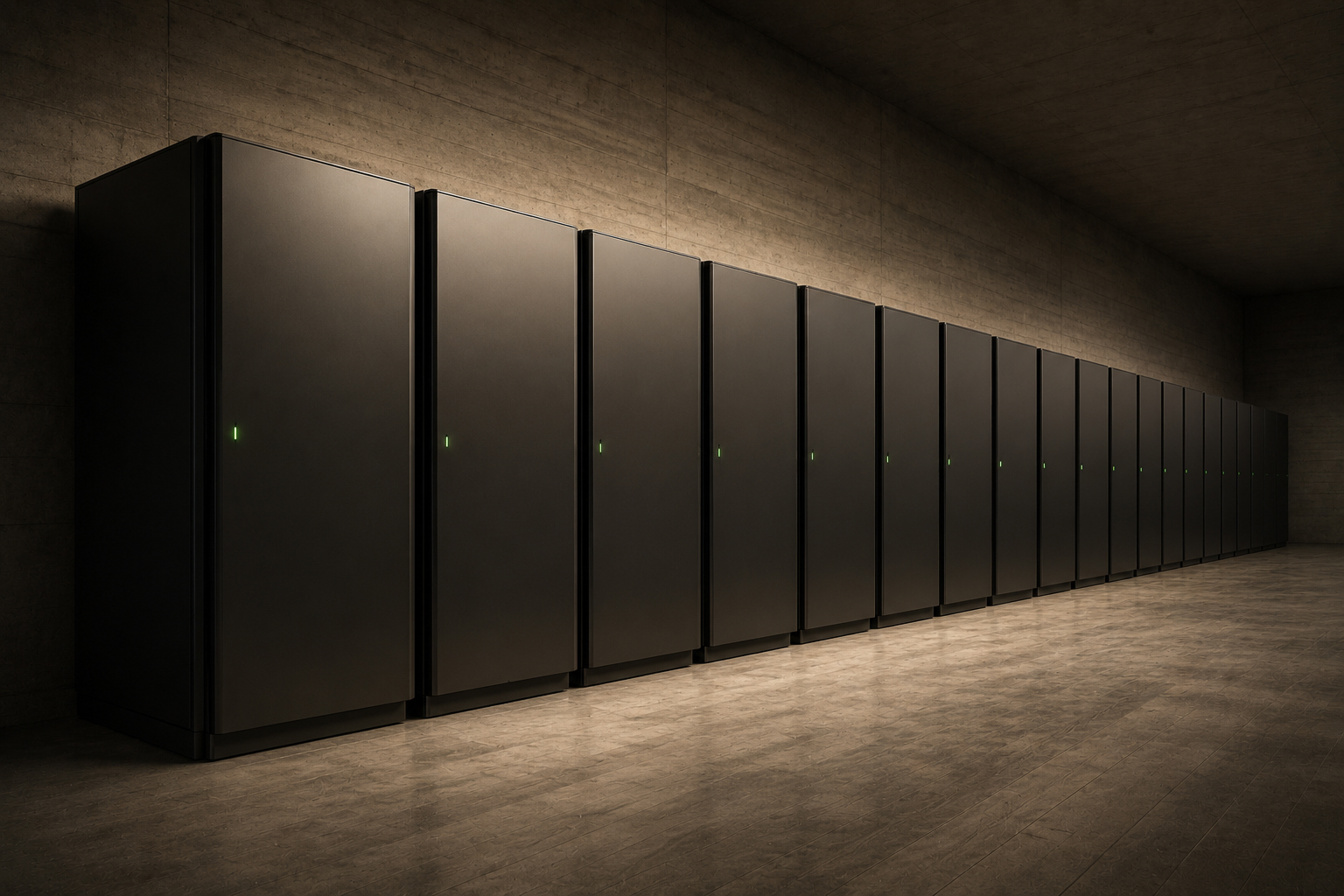
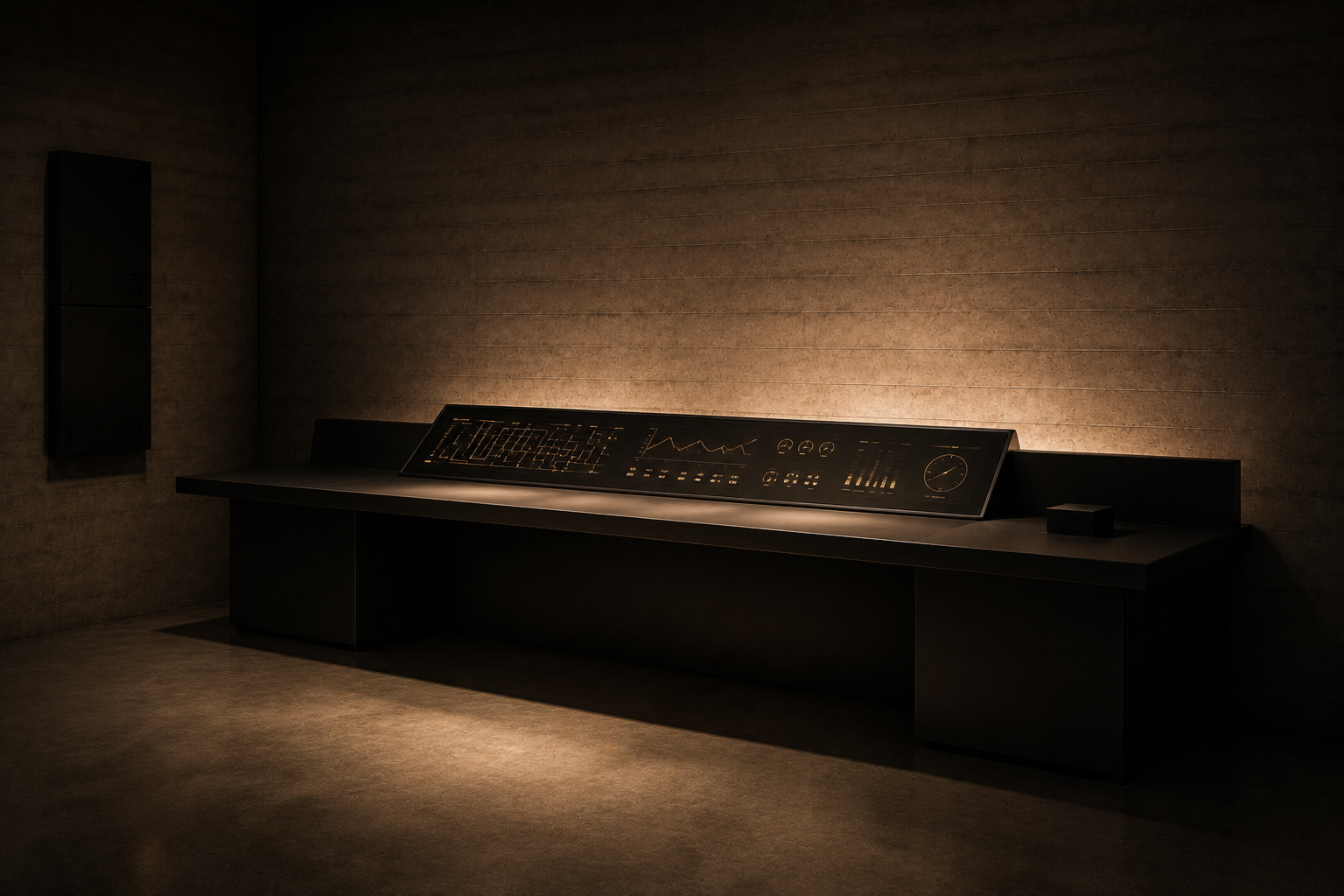
Running all of this is a single on-site intelligence: a private system that manages power, climate, water, security and provisioning, and learns how each resident likes the building to behave. It runs locally, on the resort's own hardware.
It never touches the cloud, and nothing about who is present, or what they do, ever leaves the site. It is the quietest staff Orium has: you never speak to it and rarely notice it. It keeps the conditions right and the world out.
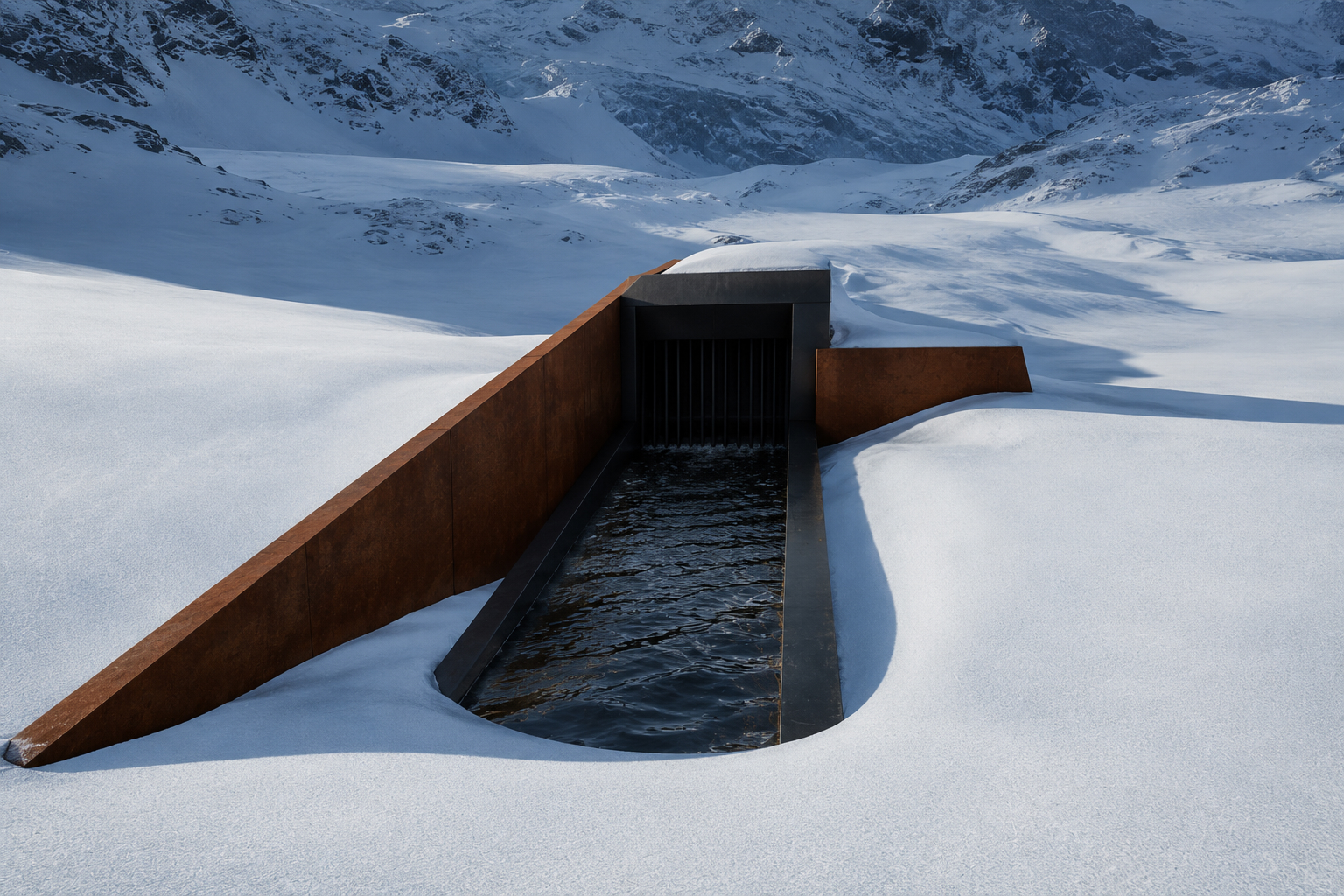
Twelve worlds, one form.
One architecture, set into twelve elements, one for every residence in the ring. Each edition takes the name of its world and is tuned to it, sited across some of the most remote ground on earth.
The land
Solid-ground editions, where the form reads most clearly against the element.
Orium Forest
Orium Dune
Orium Red
The water, cold & wind
The element pushed further, open sea, polar dark, endless rain and the bitter open.
Orium Snow
Orium Rain
Orium Green
The extreme
Where only the autonomous form can go at all, fire, salt, stone and the deep dark.
Orium White
Orium Black
Orium Rift
By request. For very few.
Orium is offered as a curated residency, a full-site buyout, or a numbered membership. You apply; we select. Privacy here is a product feature, not a setting.
Stay
A single residence for three, seven, fourteen or thirty nights. Retreat, recovery, deep work.
The whole ring
All twelve residences for a team, family or circle. The entire site, no public.
Membership
A numbered seat in the circle: network-wide access and first refusal on every new element as it opens.
Join the waitlist
First access opens to the list before anywhere else. An email is all we ask.
A private enquiry.
For a buyout, a Founders Circle seat, or a development or partnership approach, reach us directly. We reply personally.
What is Orium?
Orium is an invitation-only concept retreat: twelve identical residences in weathering steel, arranged in a ring around an empty centre and set into some of the earth's most remote landscapes. Each residence is fully self-sufficient, so a stay means complete privacy and near-total seclusion.
Where are the Orium retreats?
Each Orium edition sits in a different extreme environment, from bare granite above a sea of cloud to open desert, deep forest, Arctic snow and a salt flat. Site names indicate approximate regions only; the twelve worlds span remote locations across several continents.
How many residences does Orium have?
Each Orium ring holds twelve identical residences around a single empty centre, linked by a raised walkway to a shared Commons building. Every residence is private, self-contained and faces outward toward its landscape through one full-height glass wall.
How do you stay at Orium?
Orium is offered by invitation as a private residency, a full-site buyout, or a numbered membership. Access is by enquiry and pricing is shared privately. Development and partnership approaches from operators are welcome through the same enquiry.